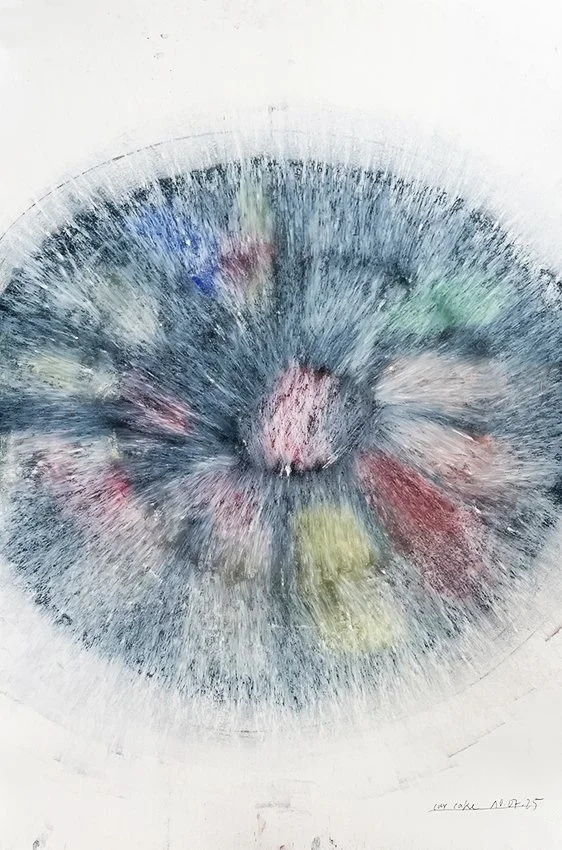
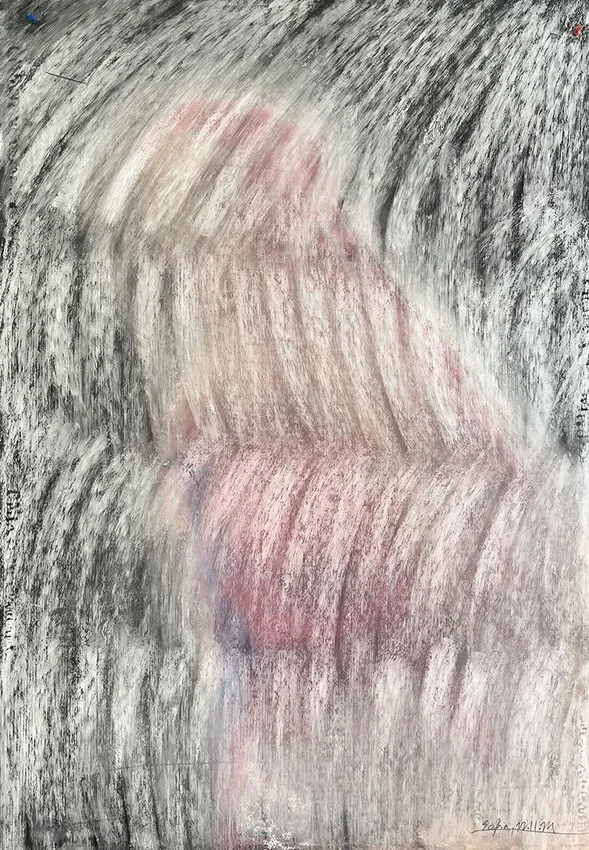
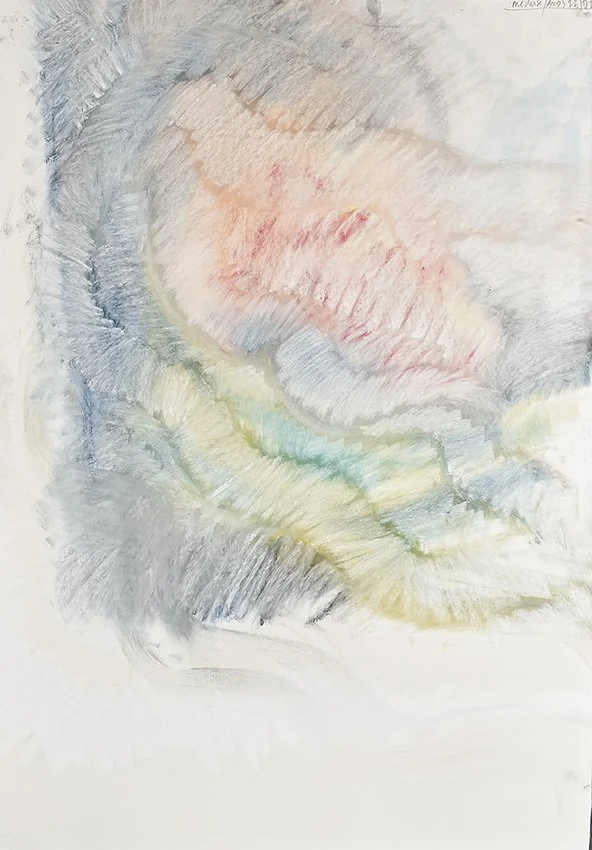
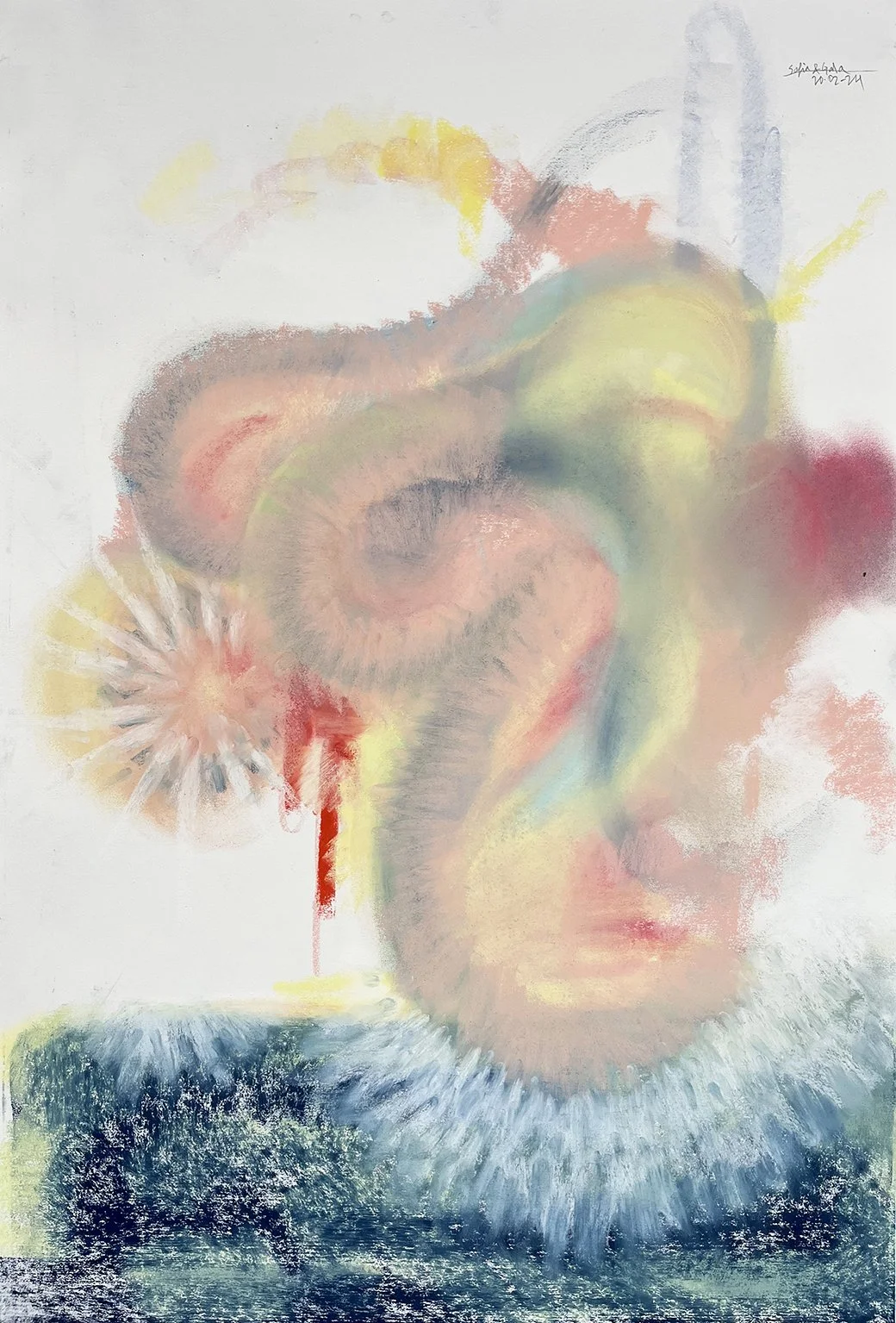
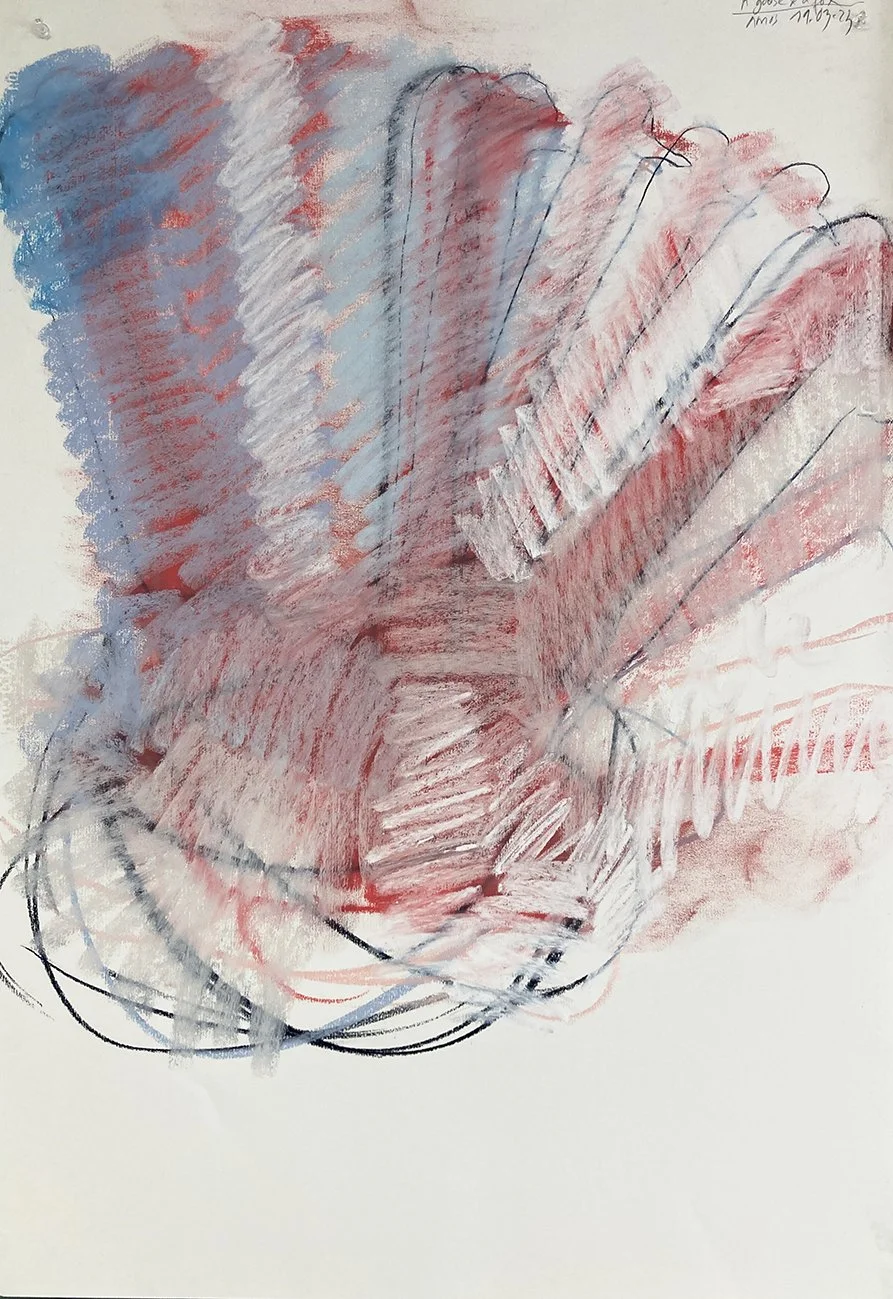
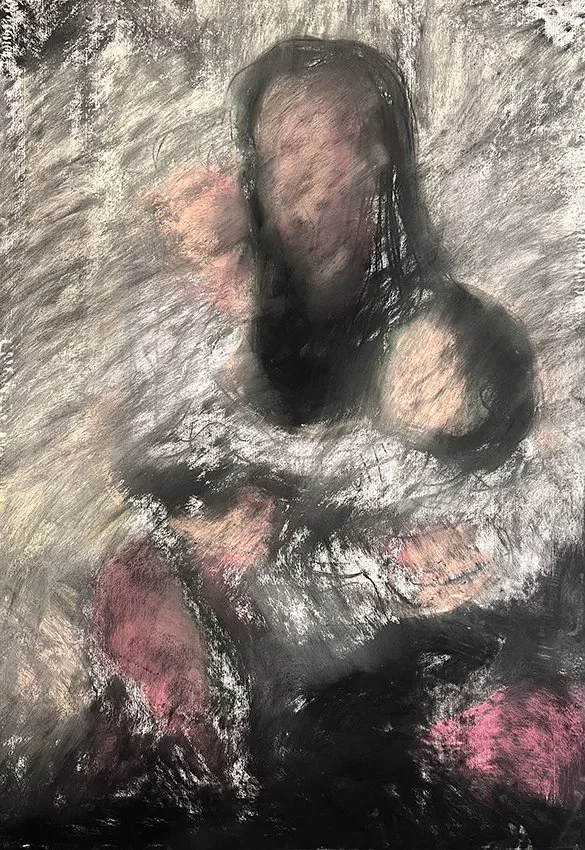
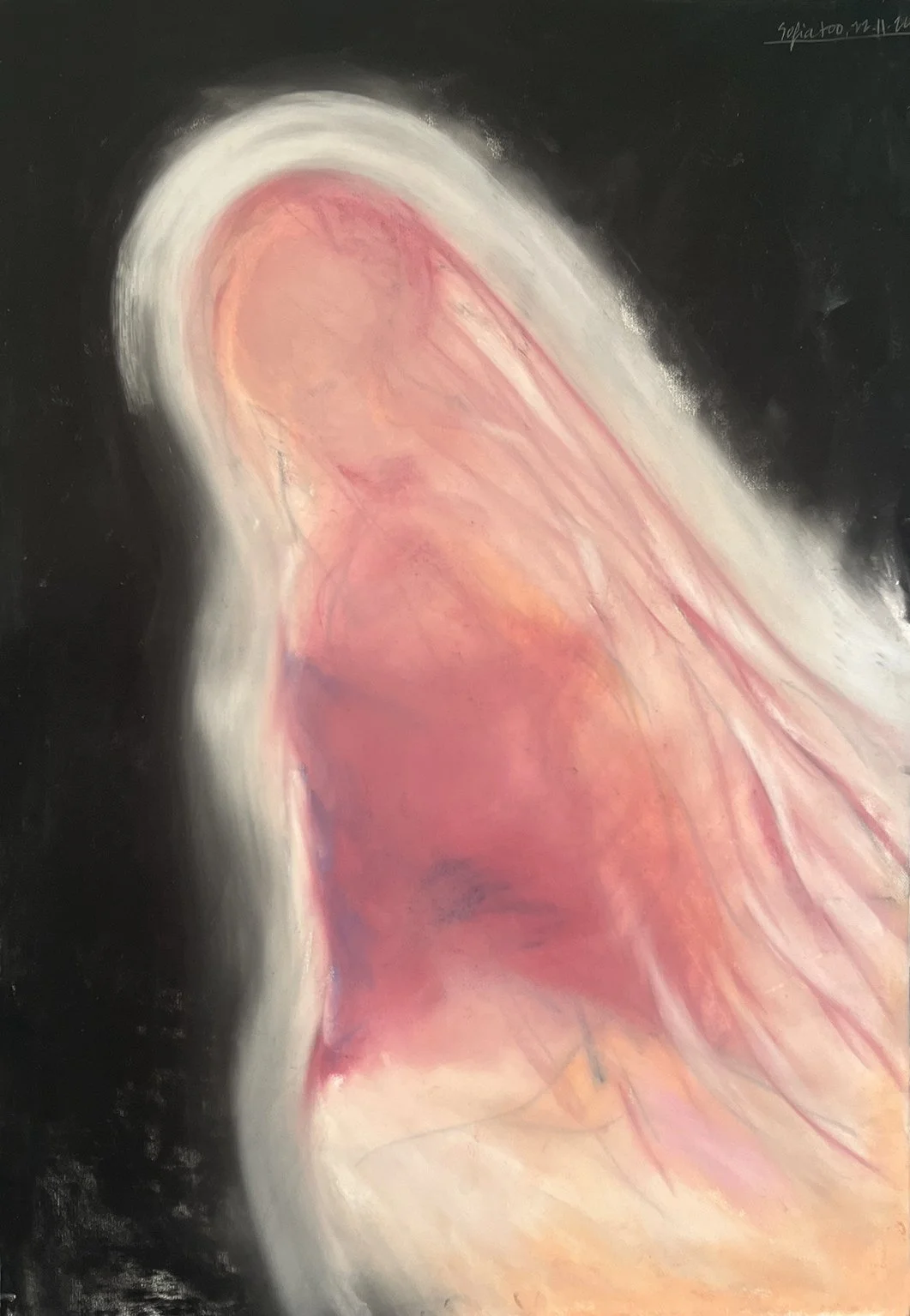
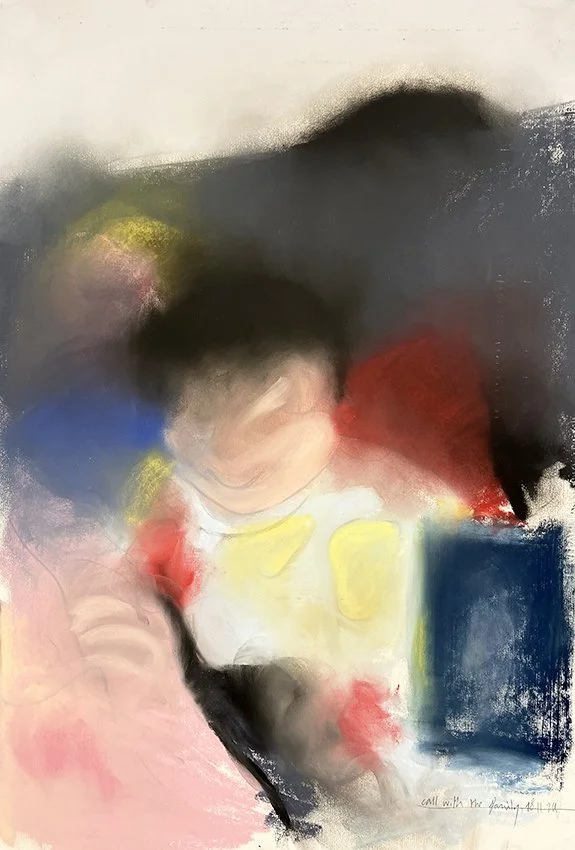
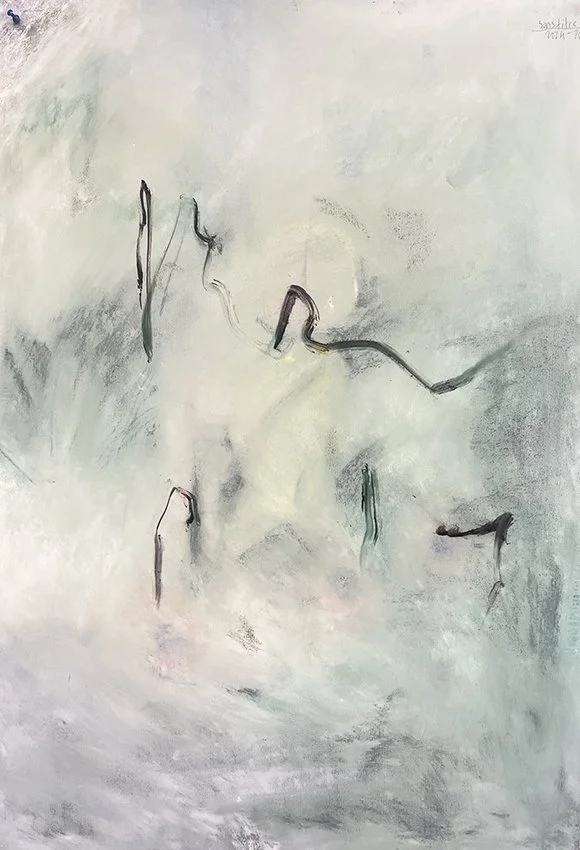
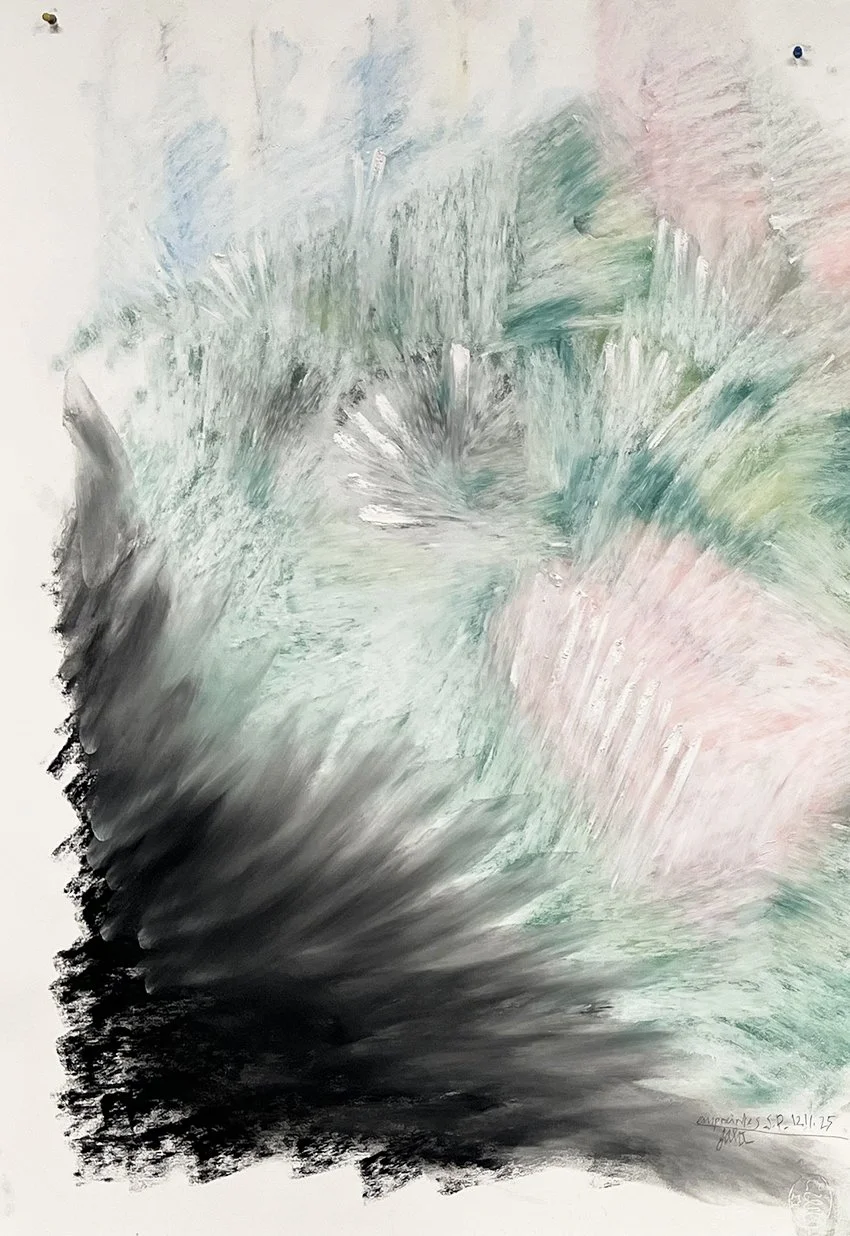
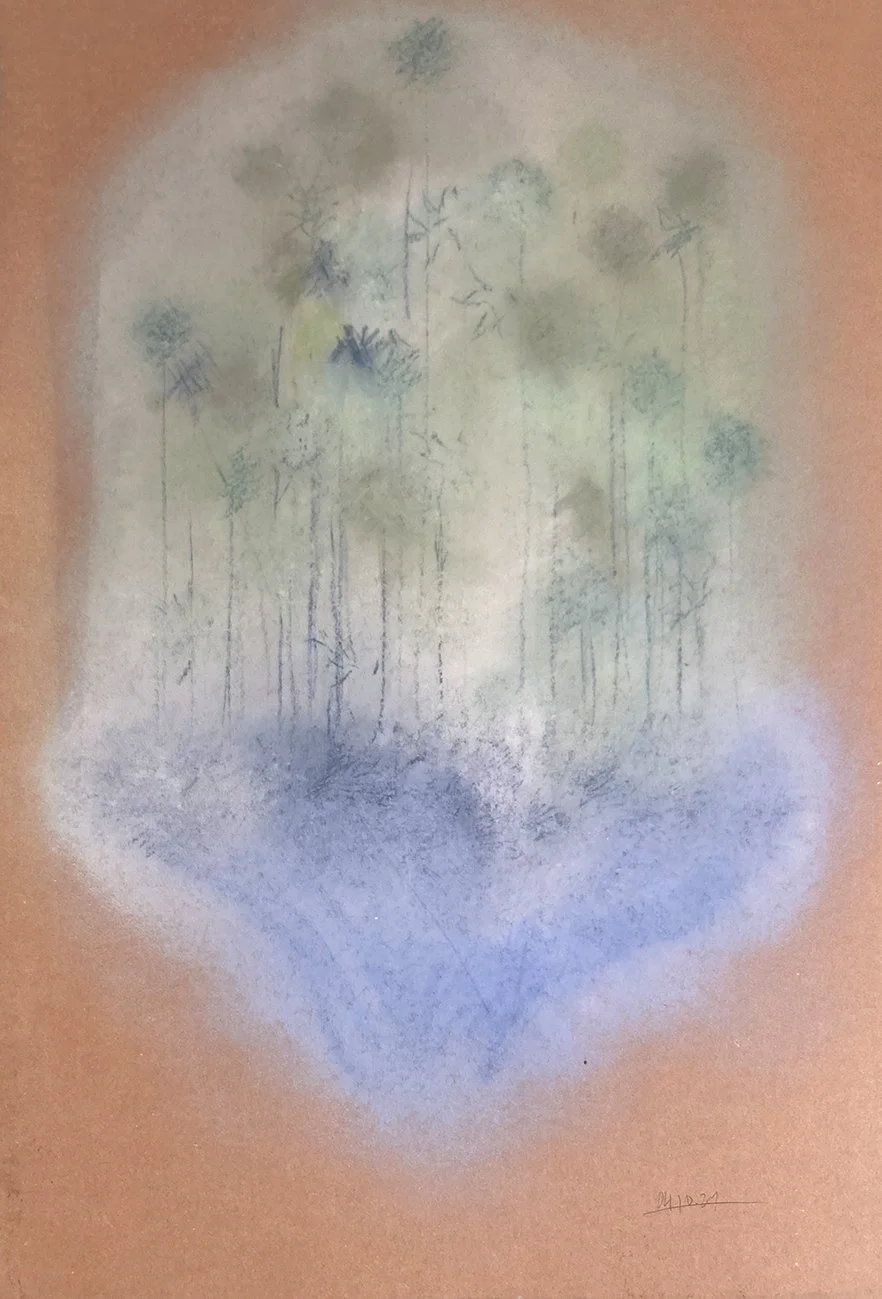
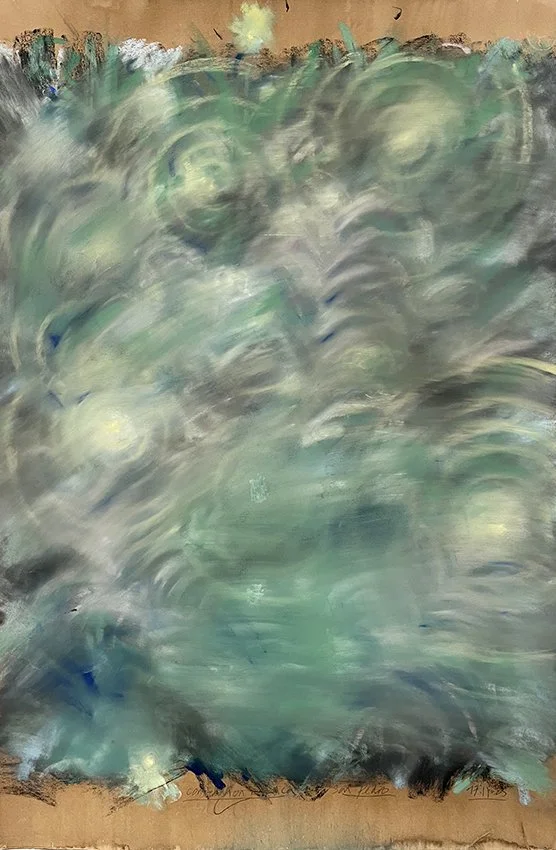
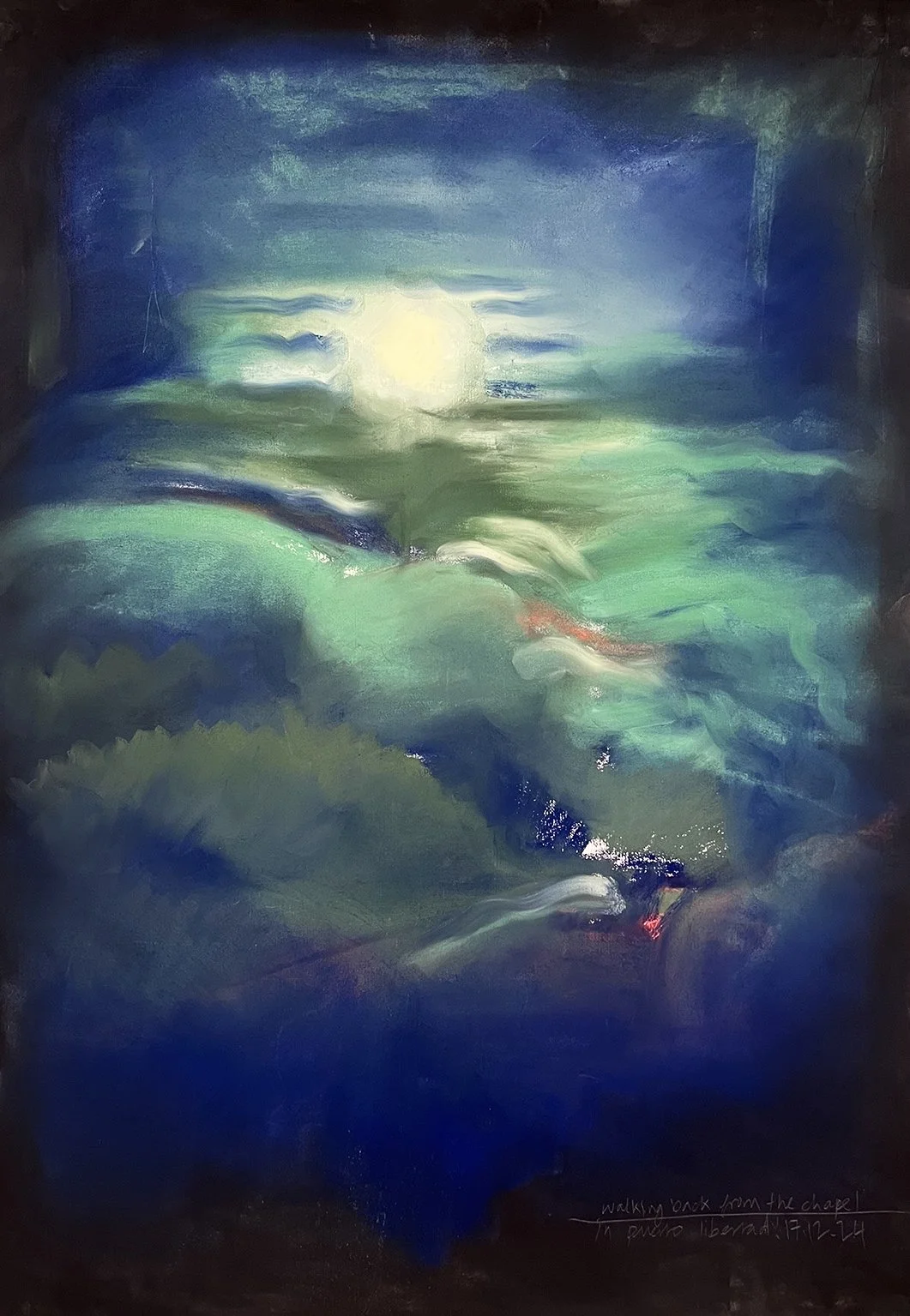
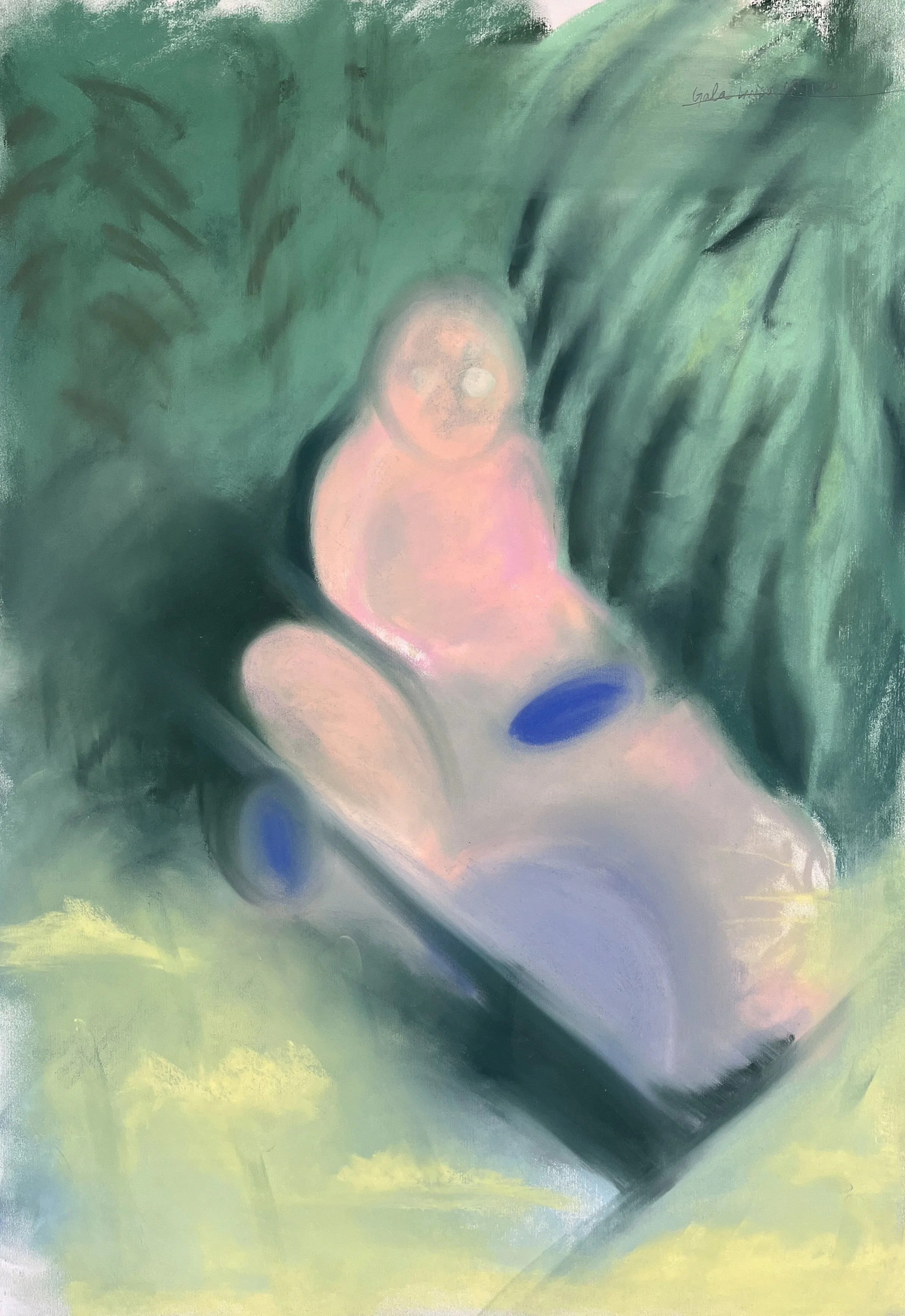
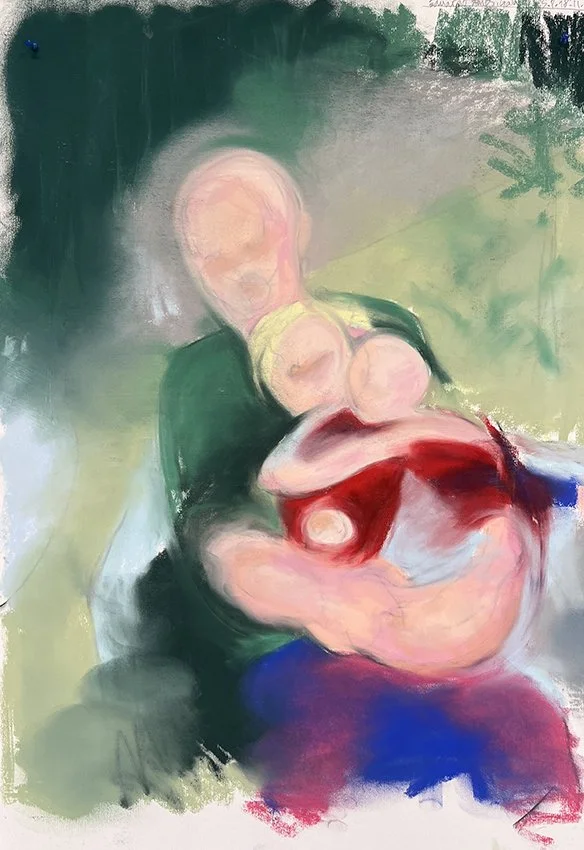
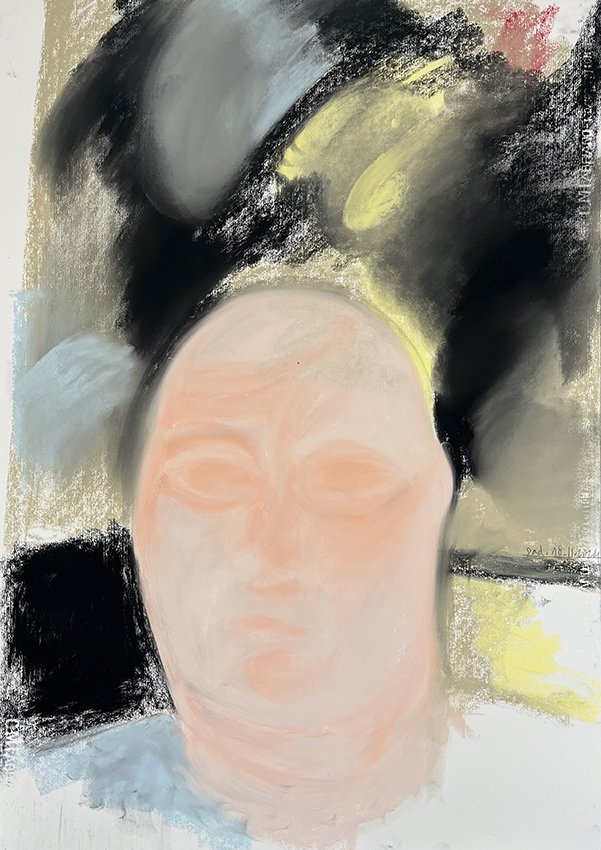
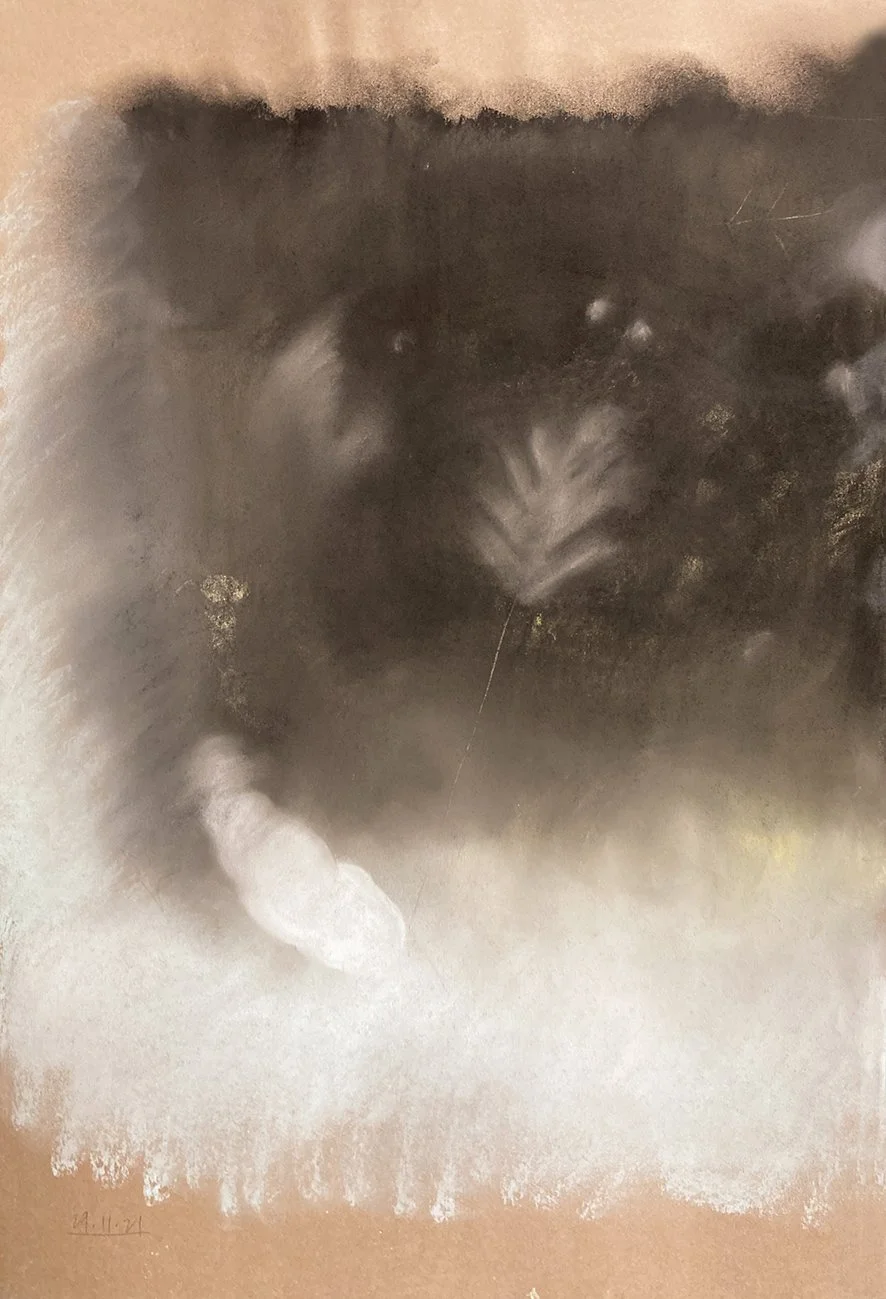
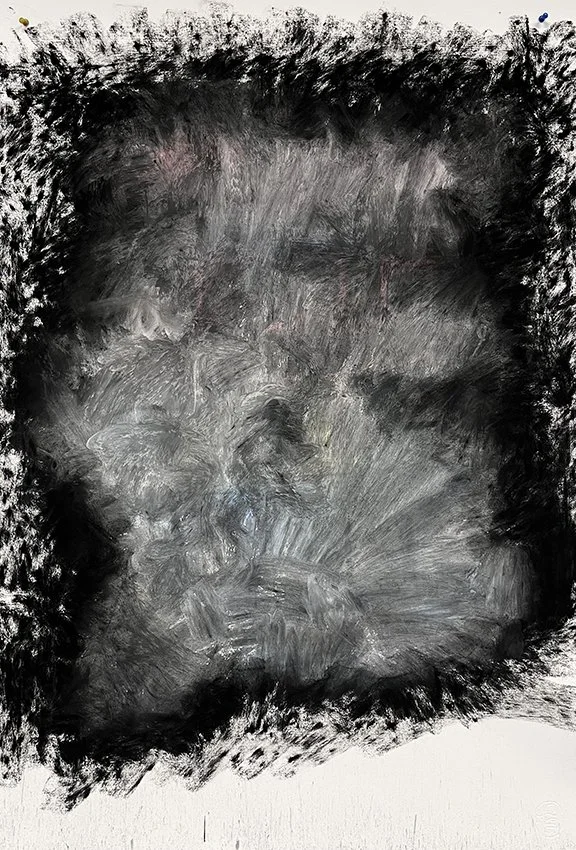
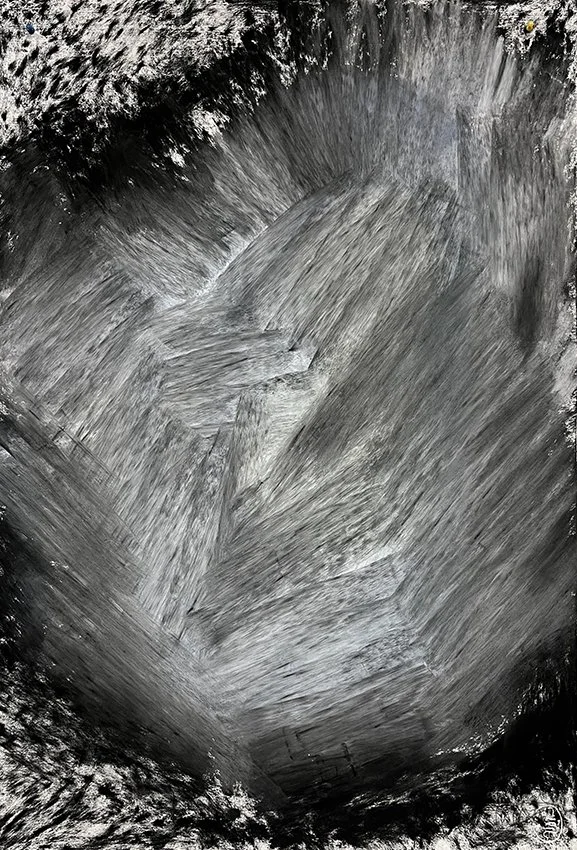
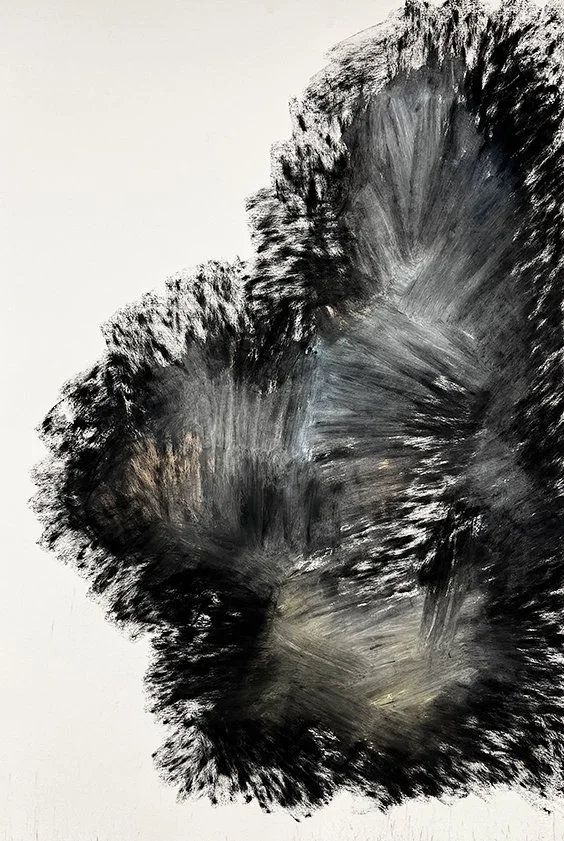
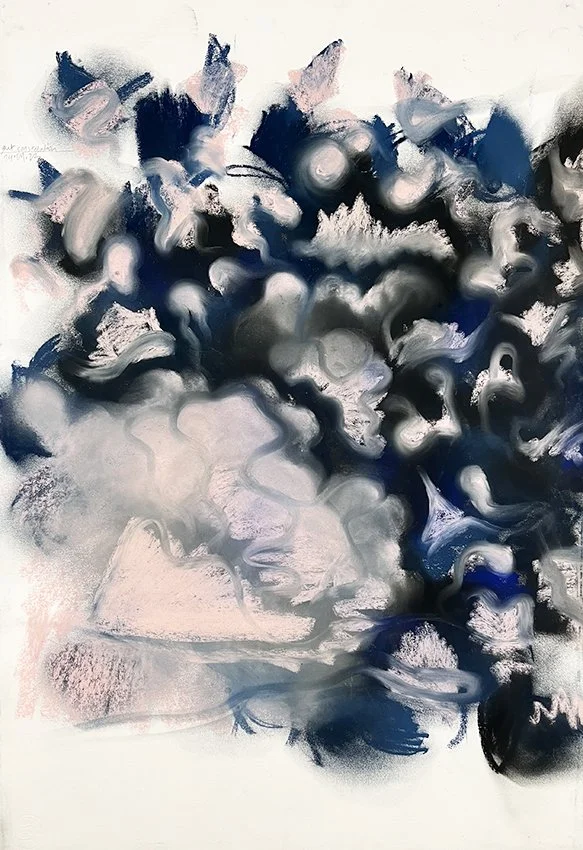
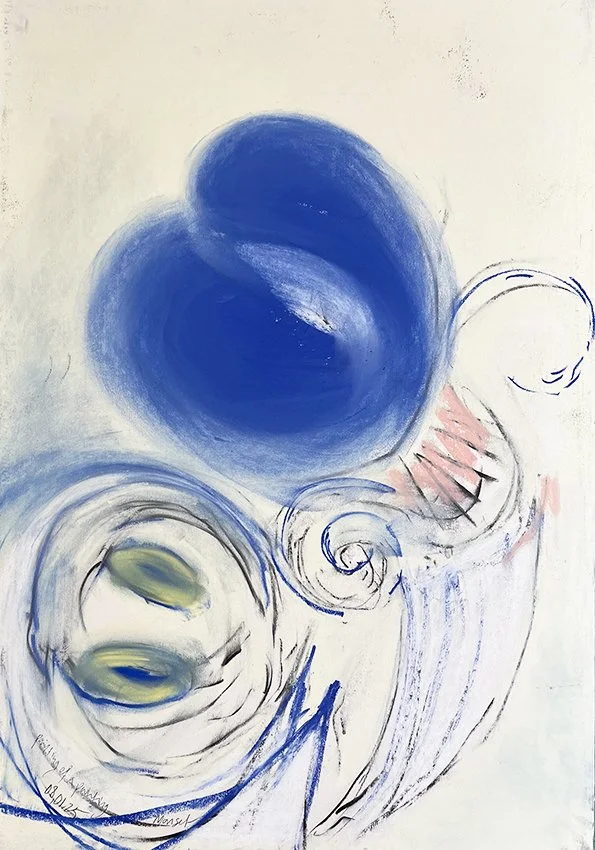
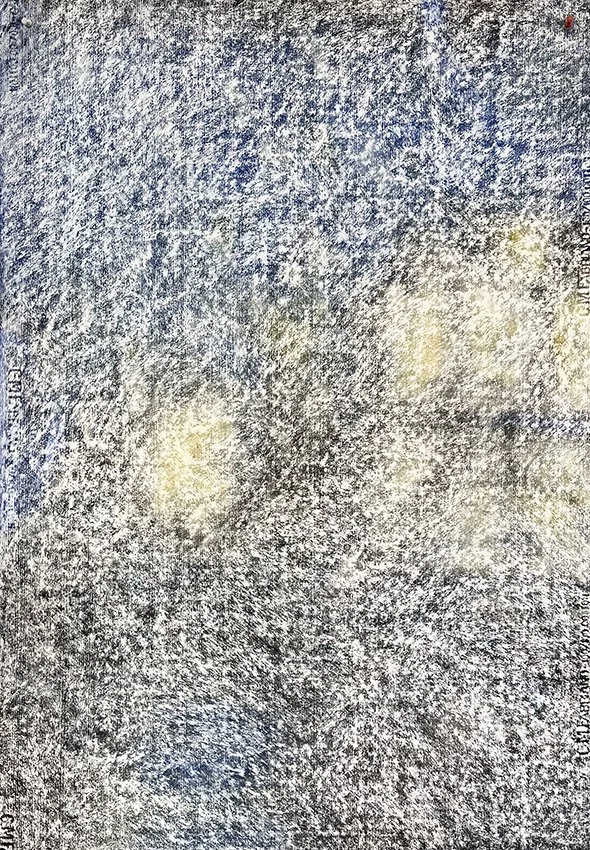
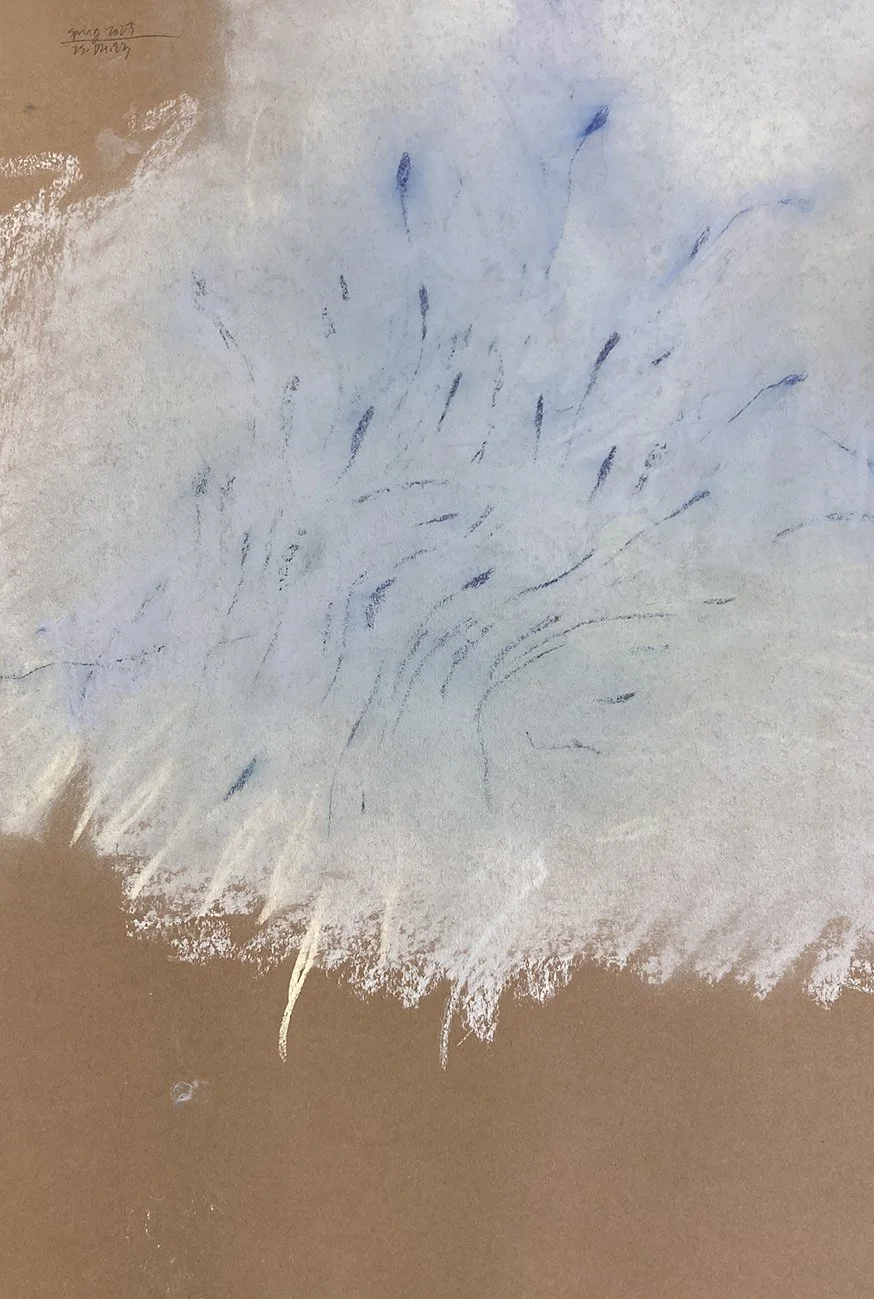
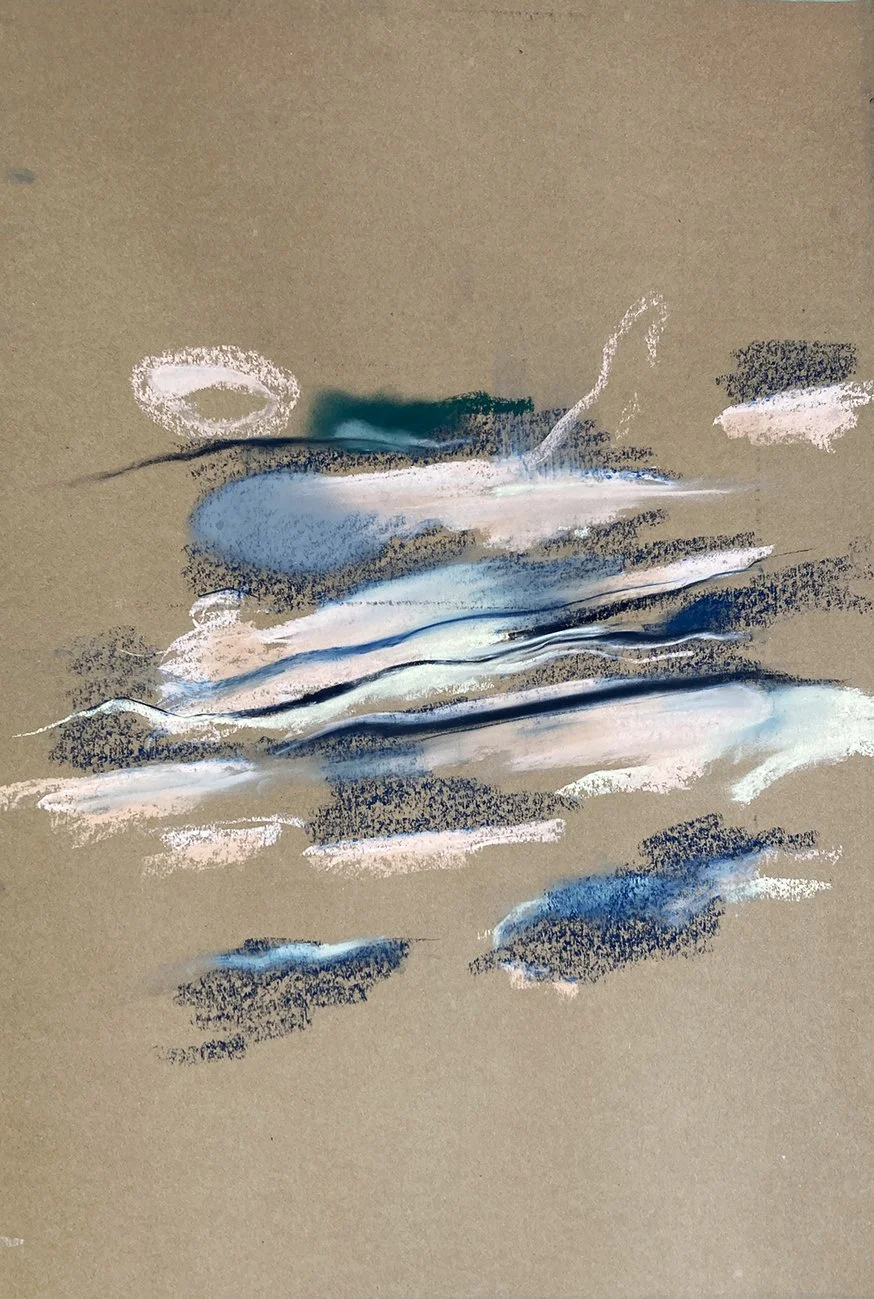
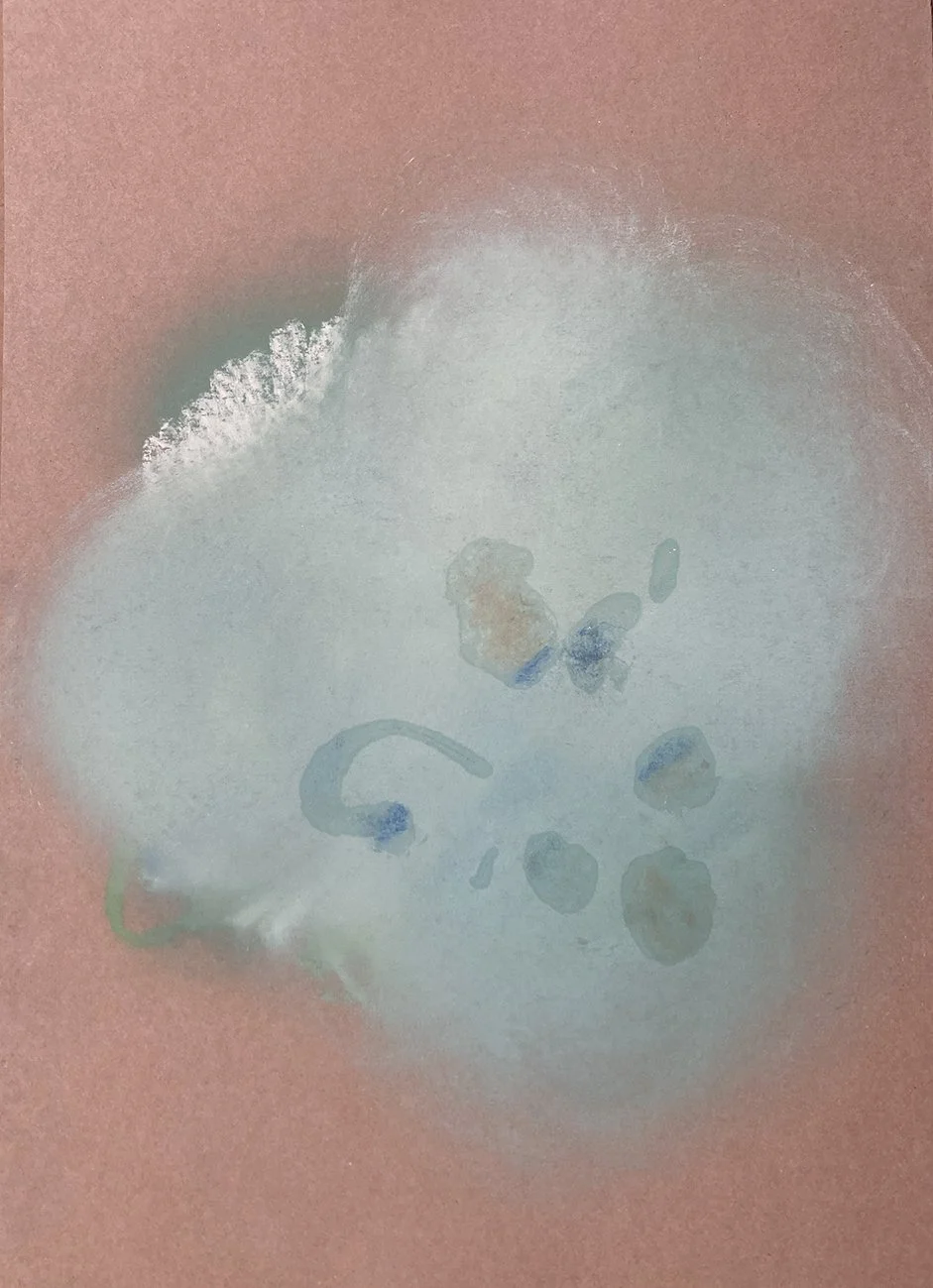
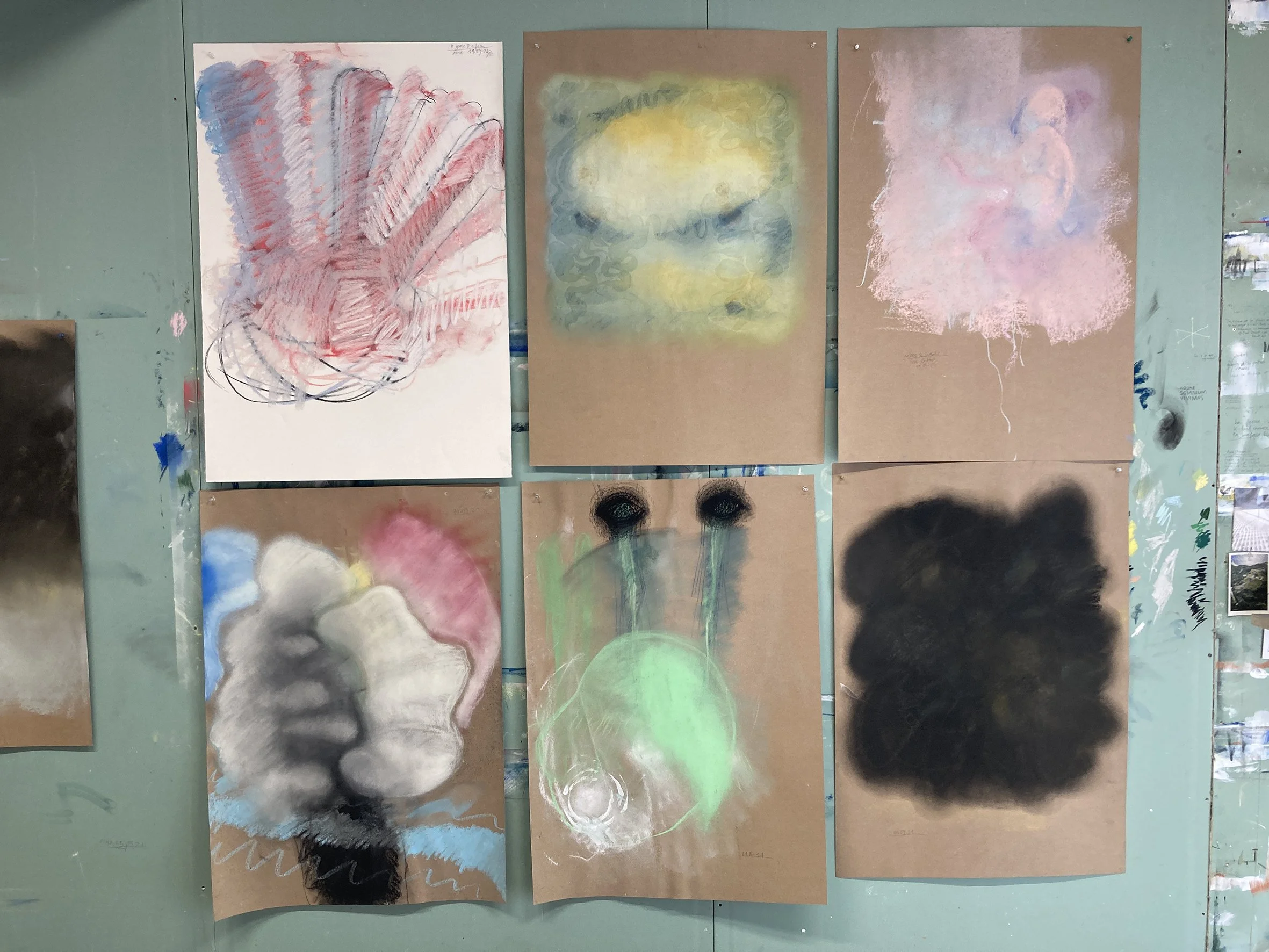
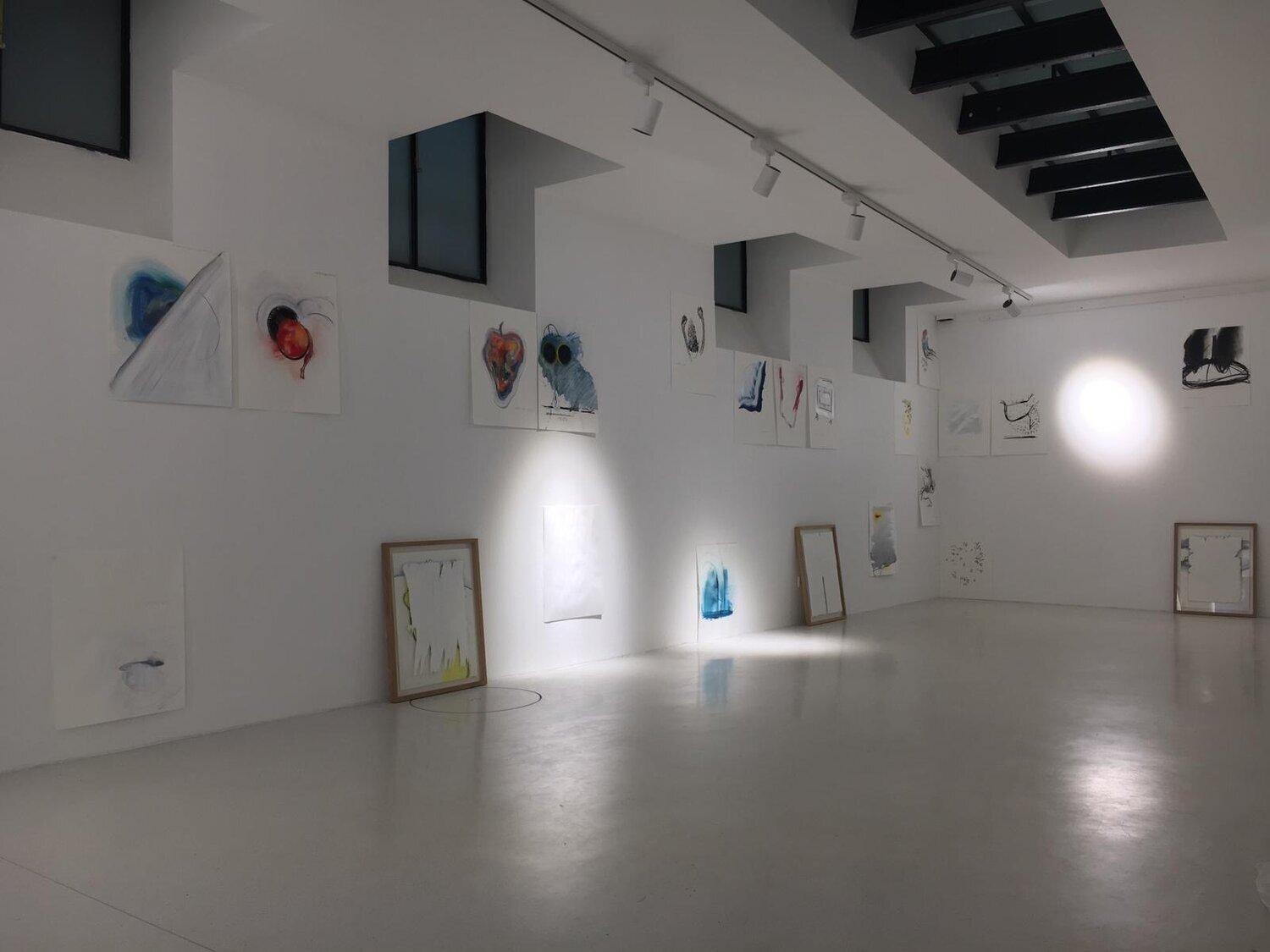
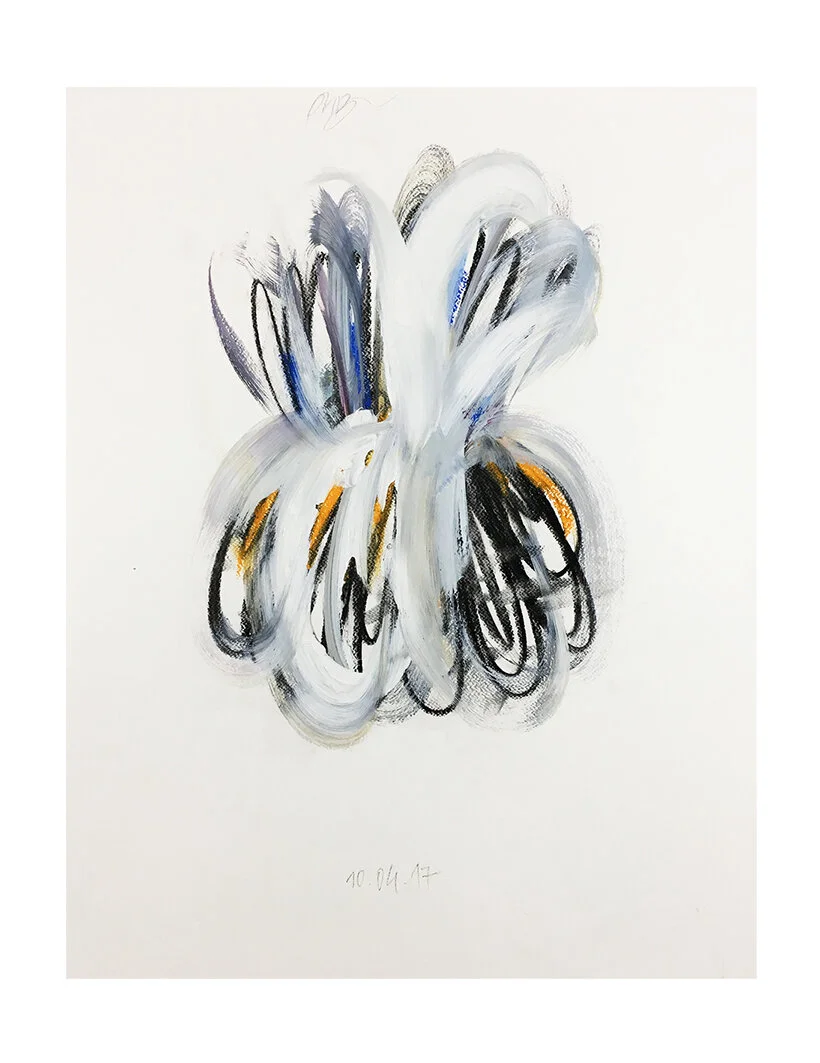
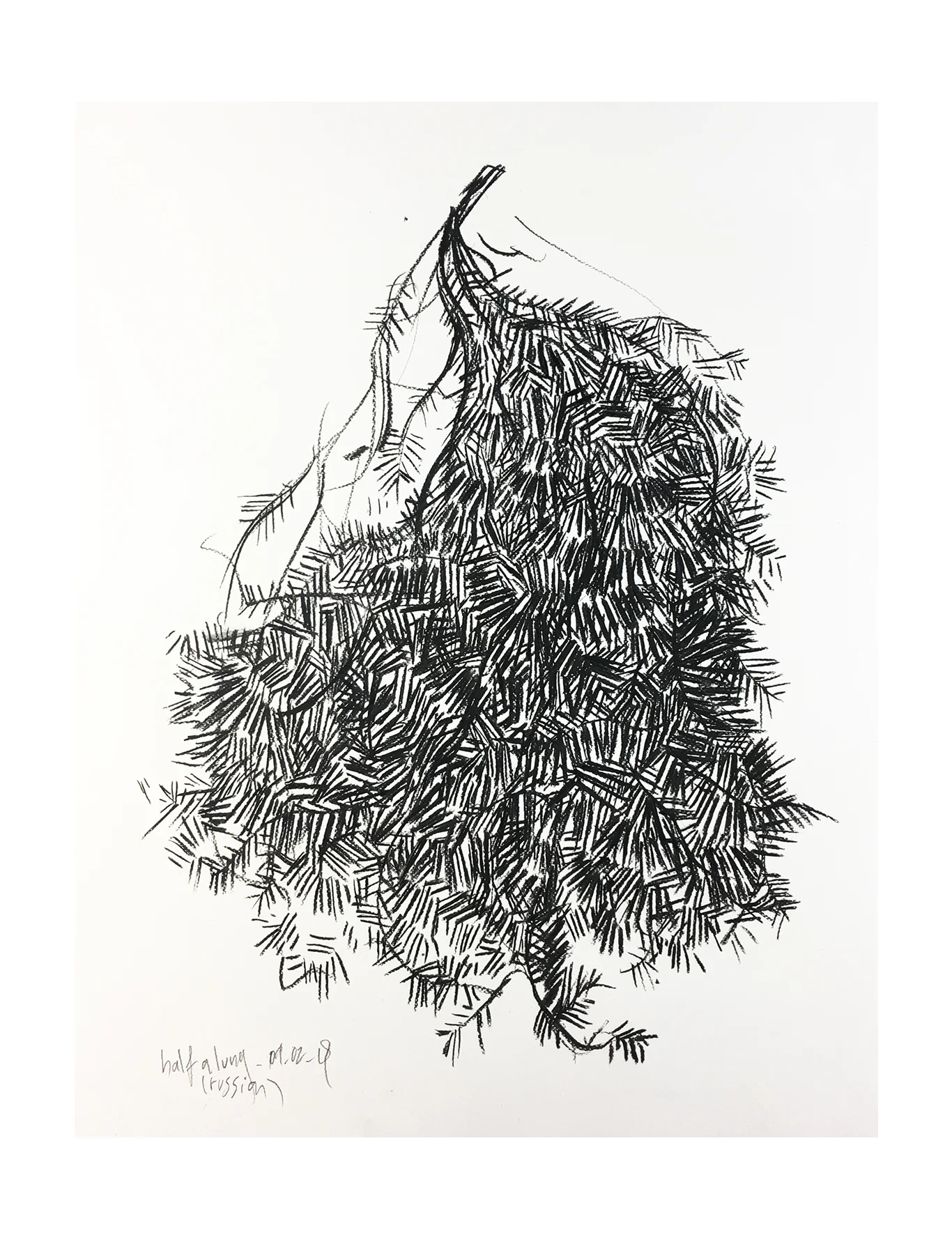
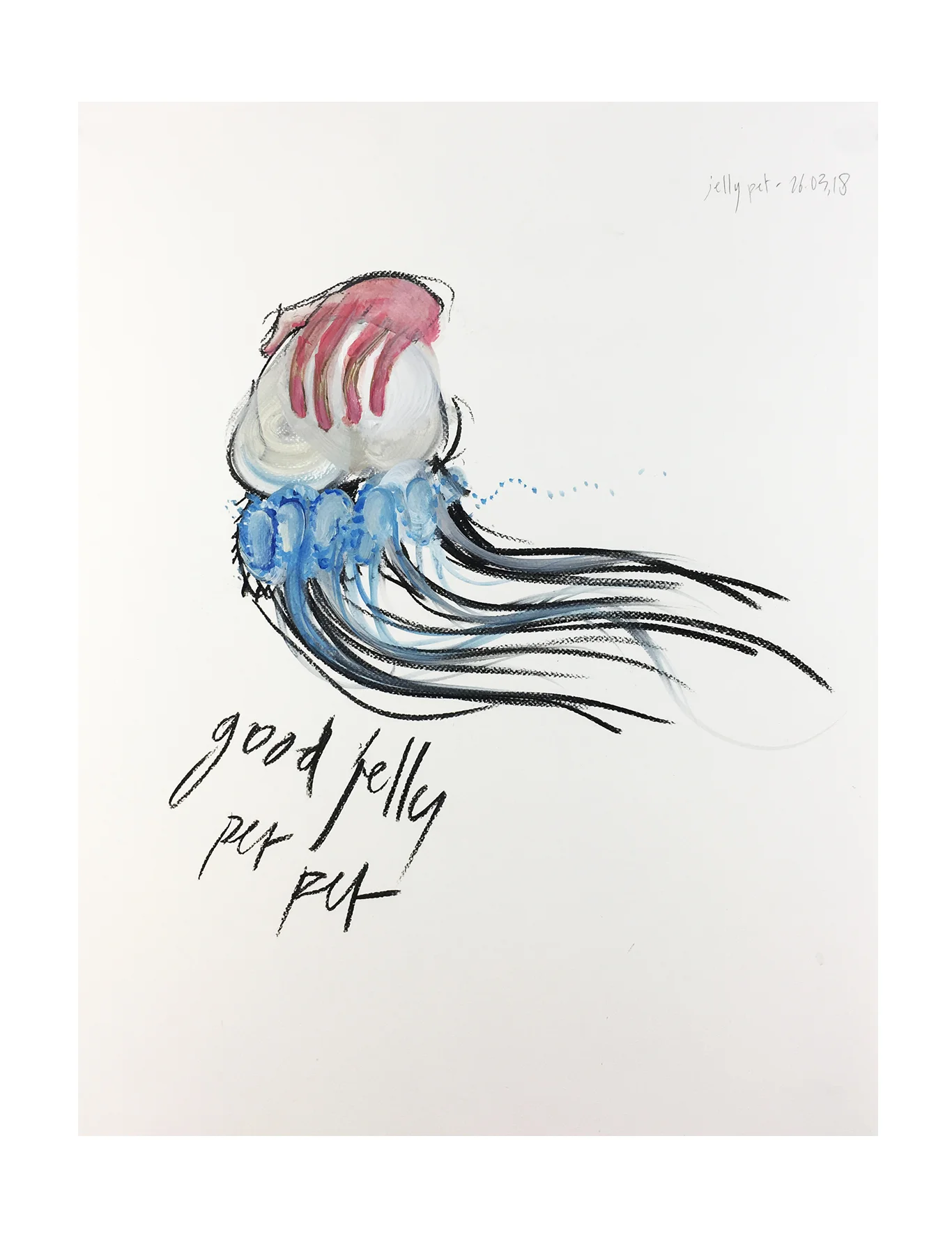
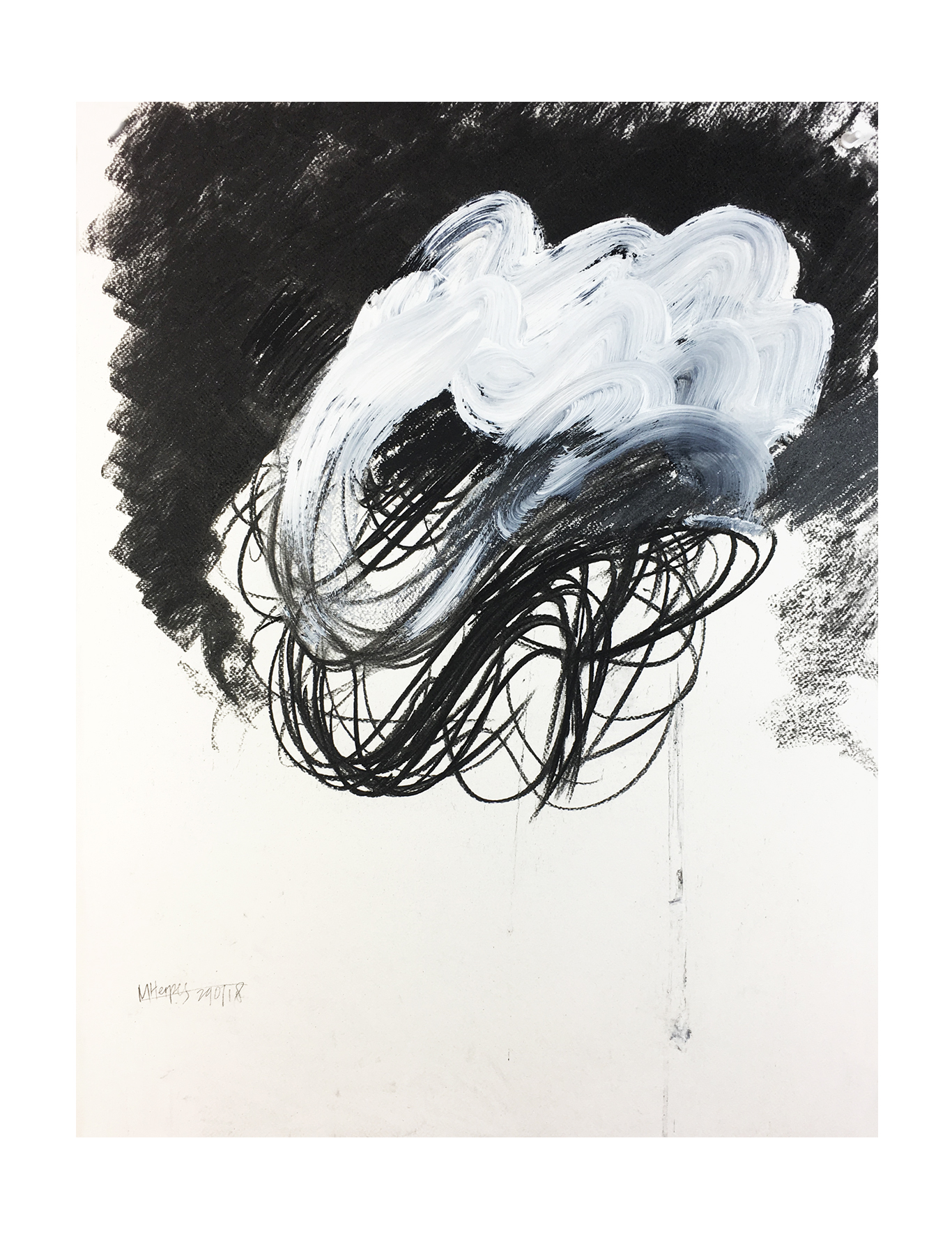
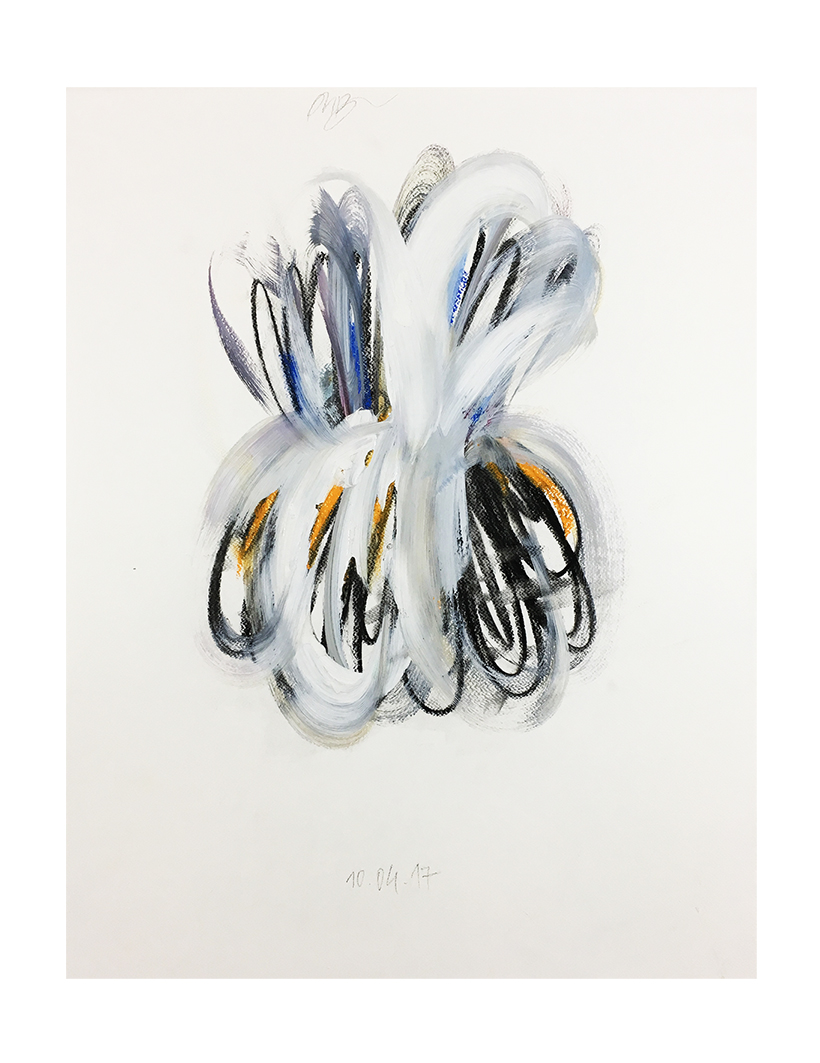
Extract from a large body of work on paper made between 2016 and 2025. Mix media on paper . Unique piece. 50 x 65 cm , 70 x 100 cm, 110 × 75 cm
Different body of work from 2020 to 2025
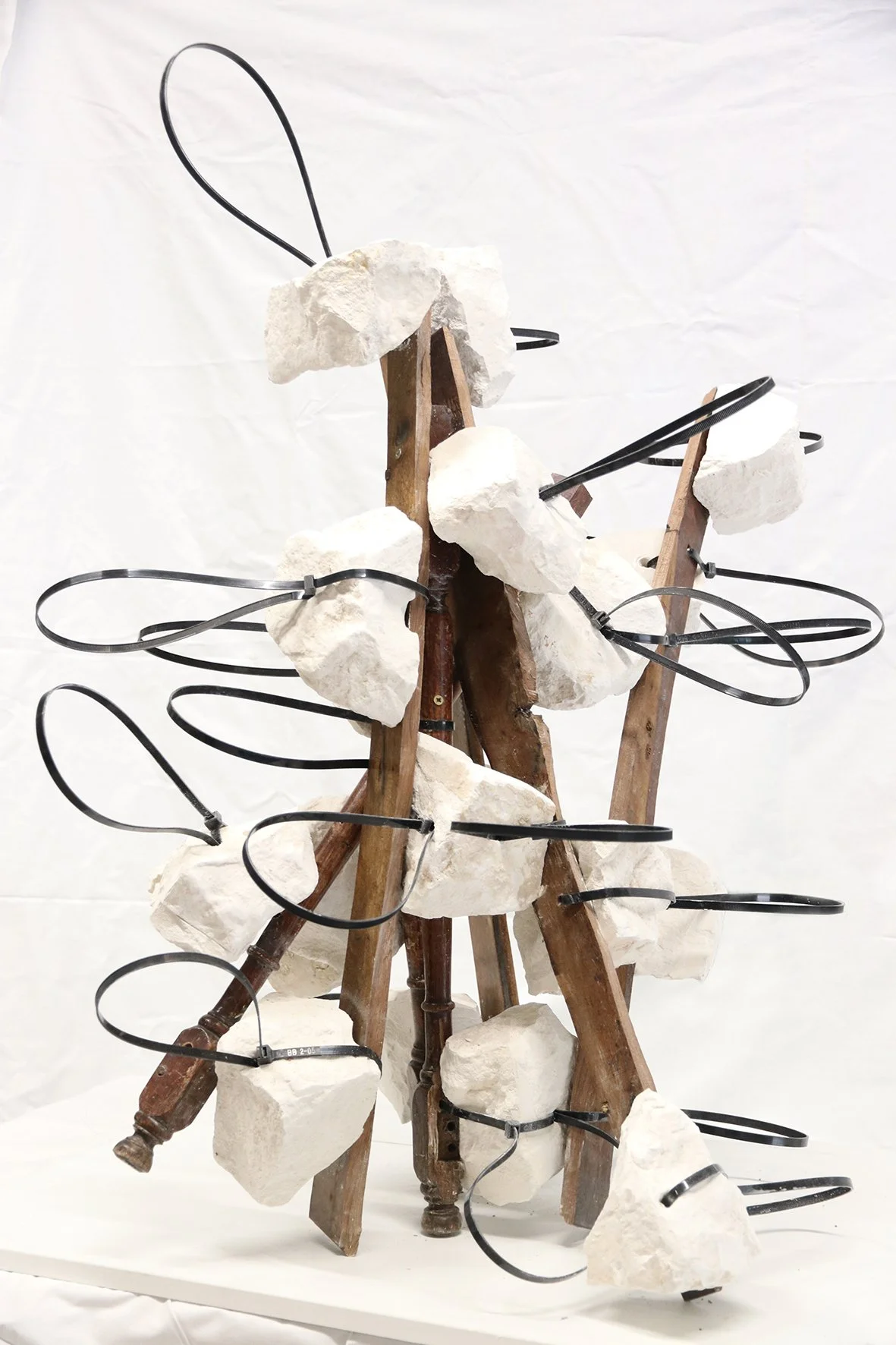
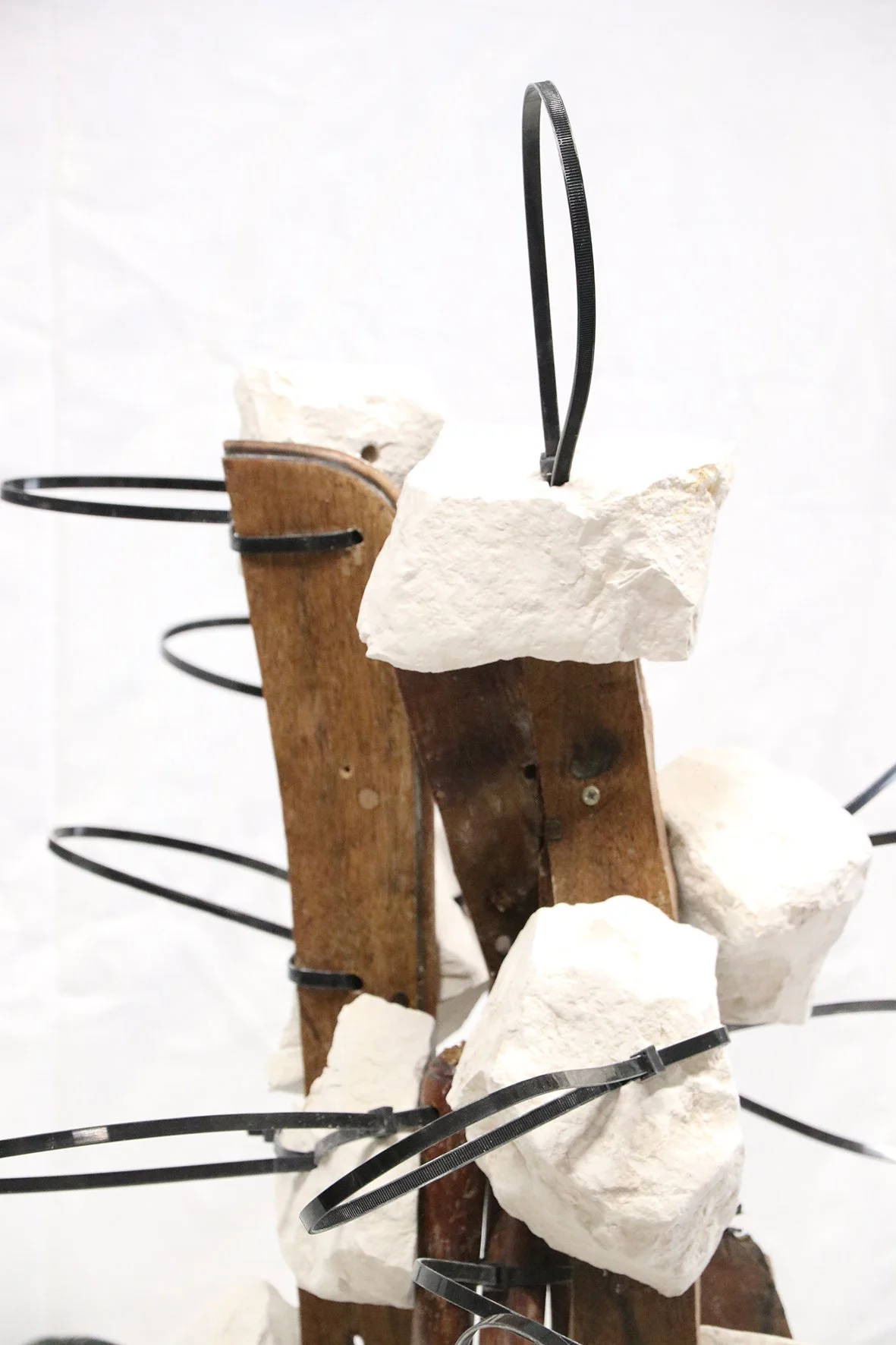
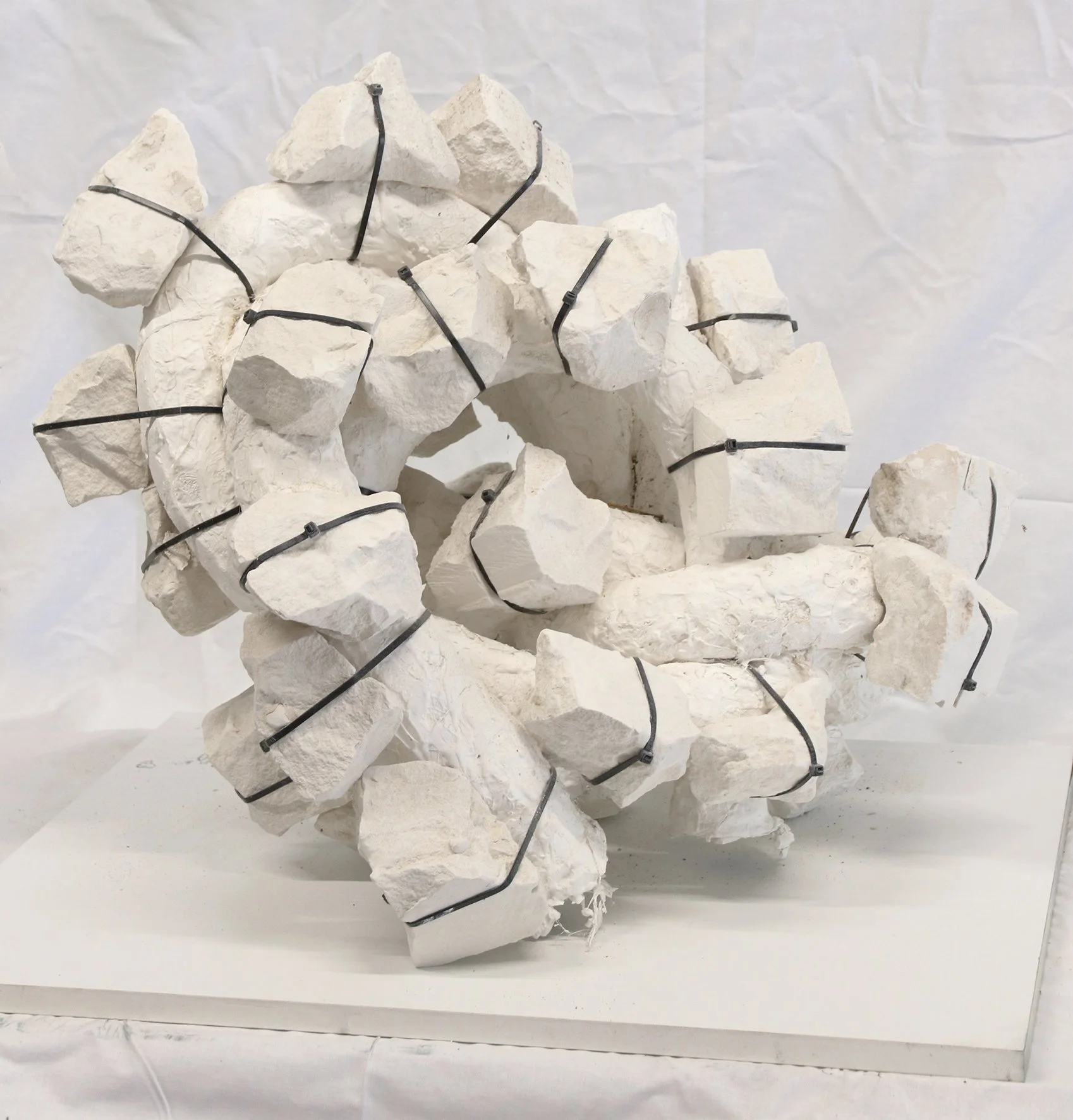
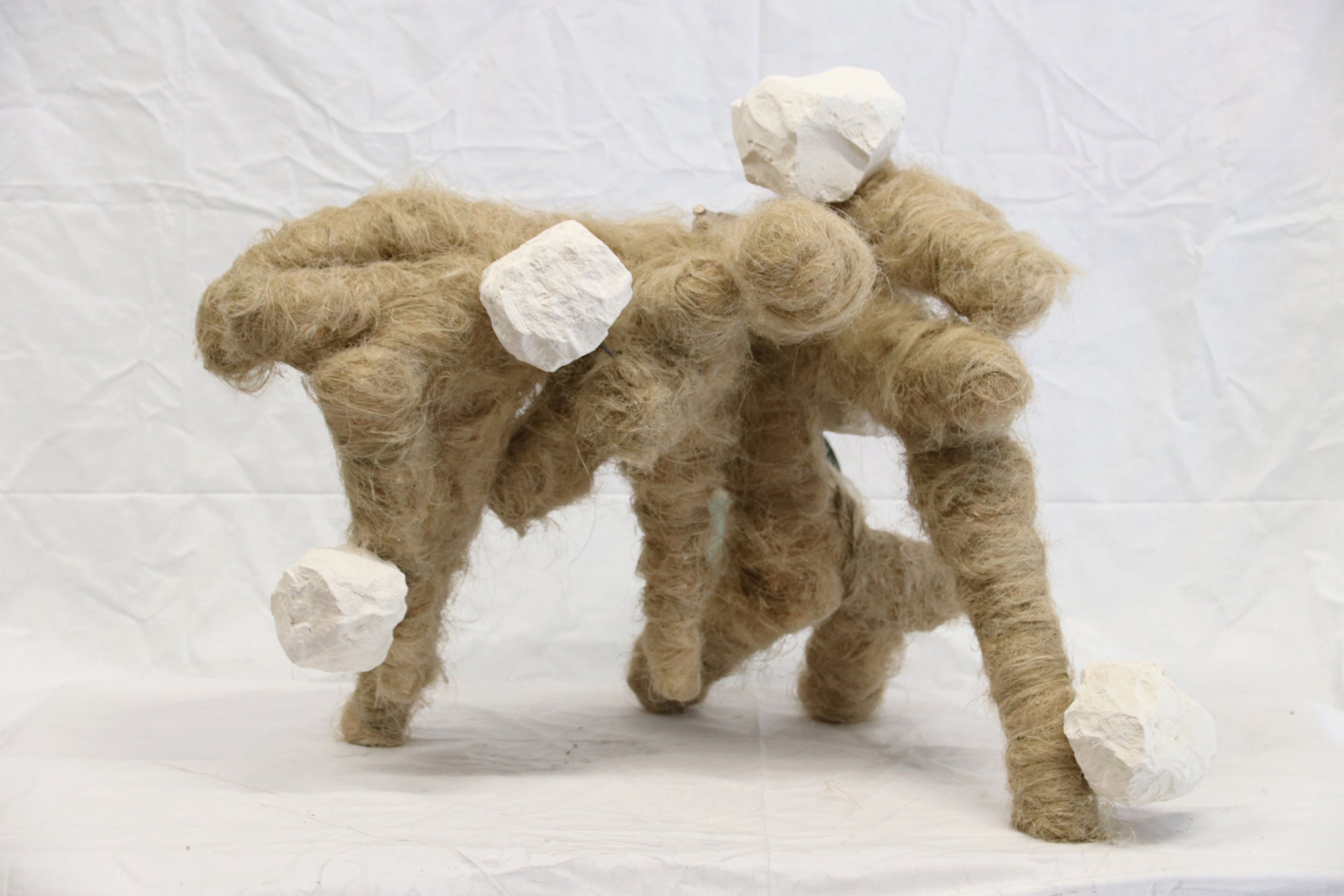
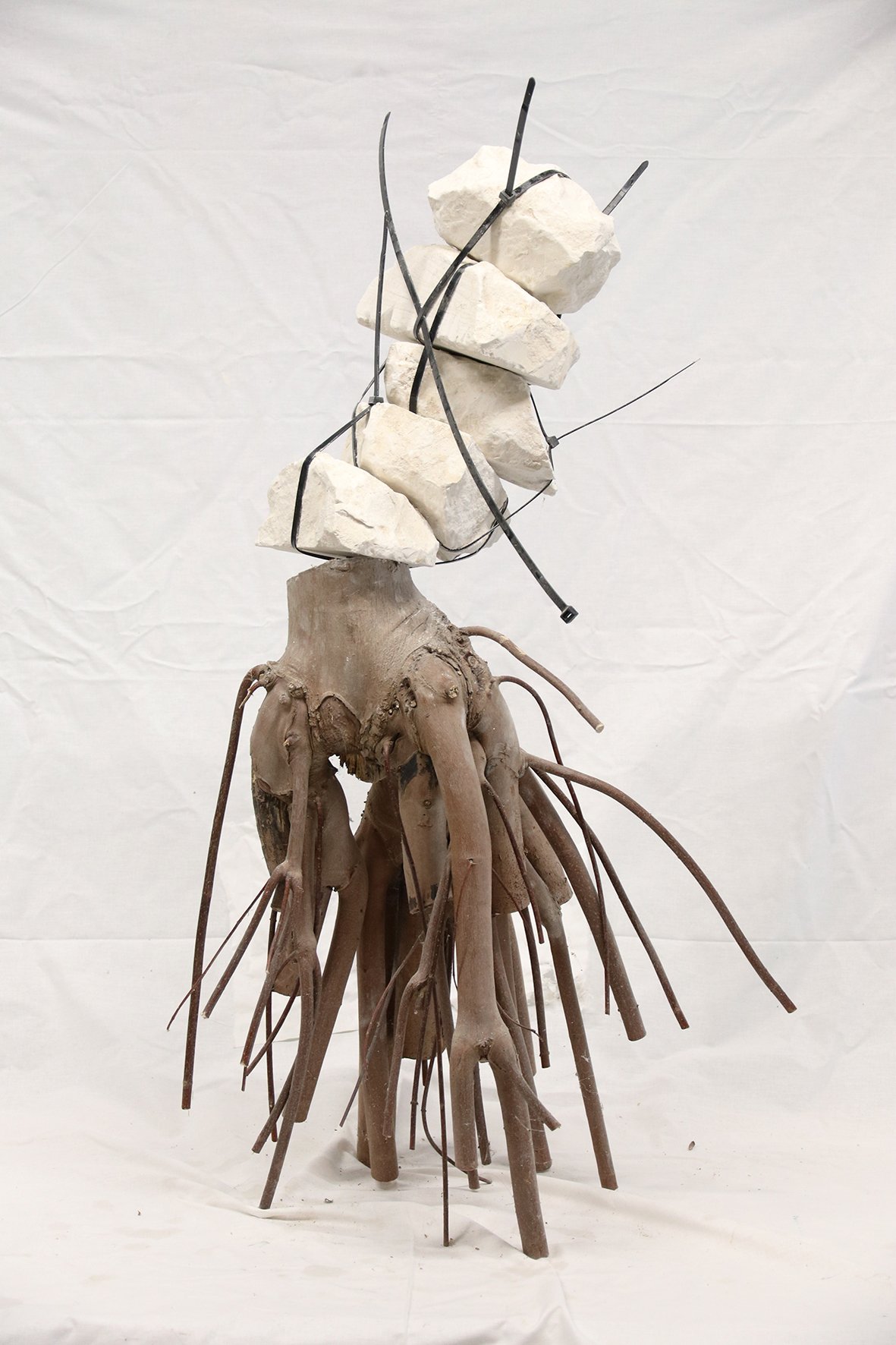
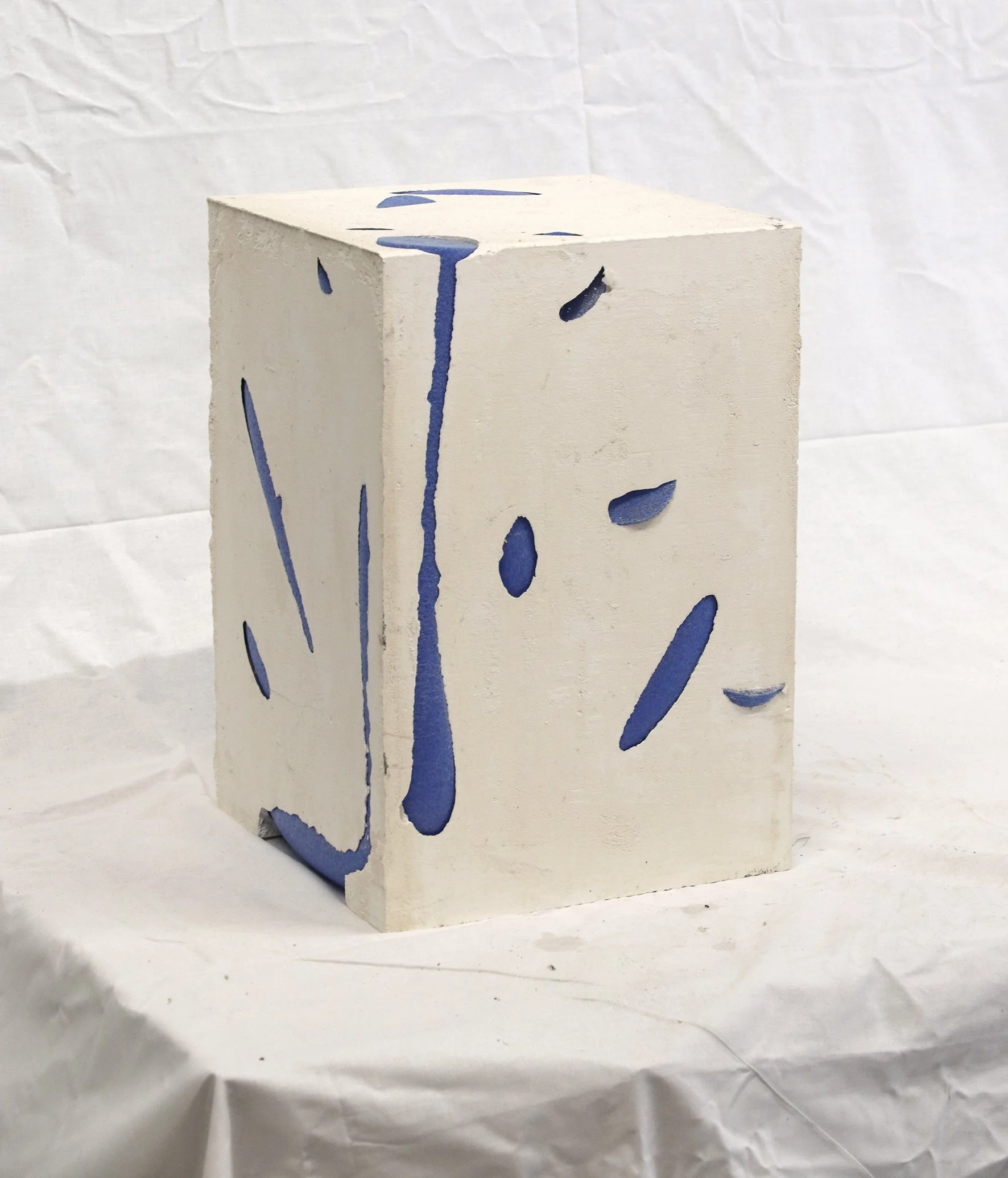
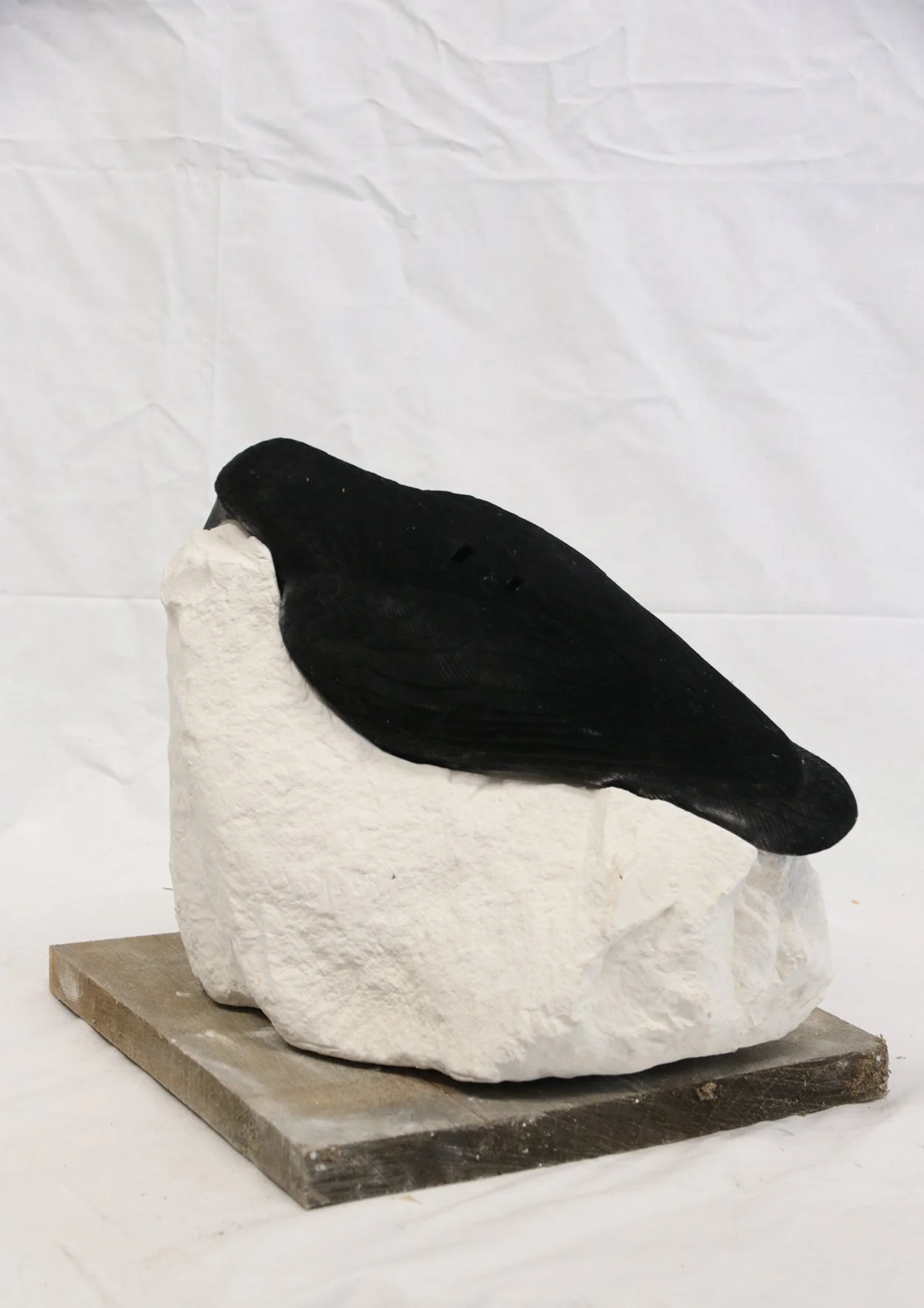
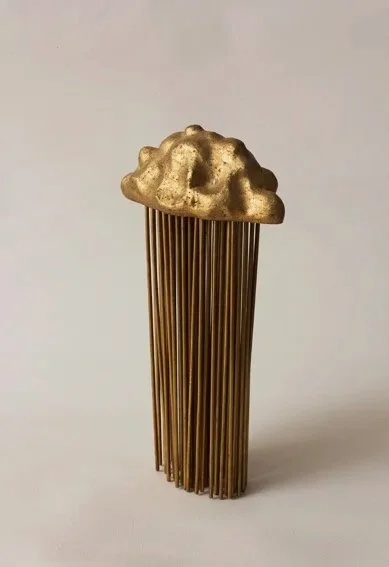
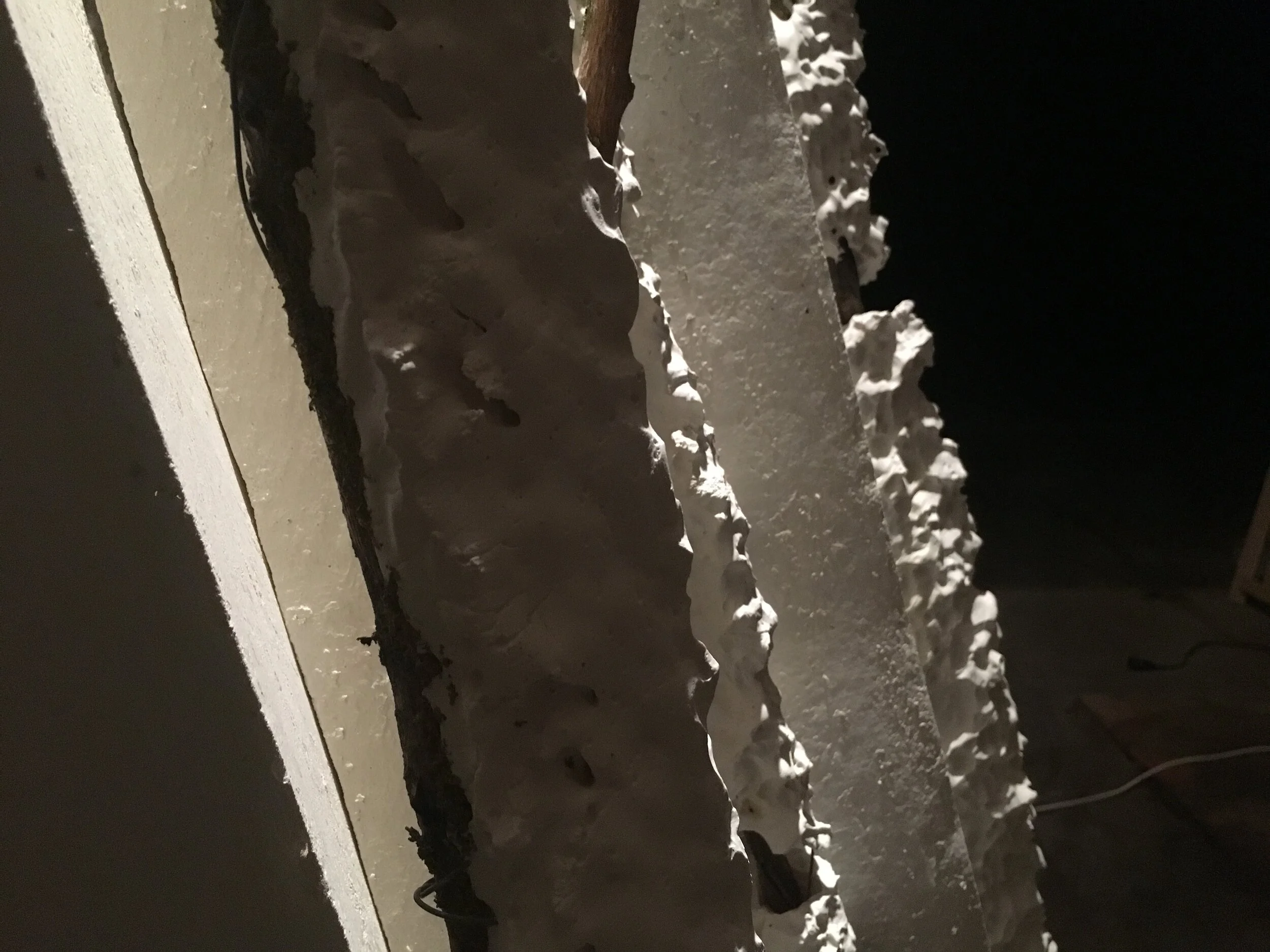
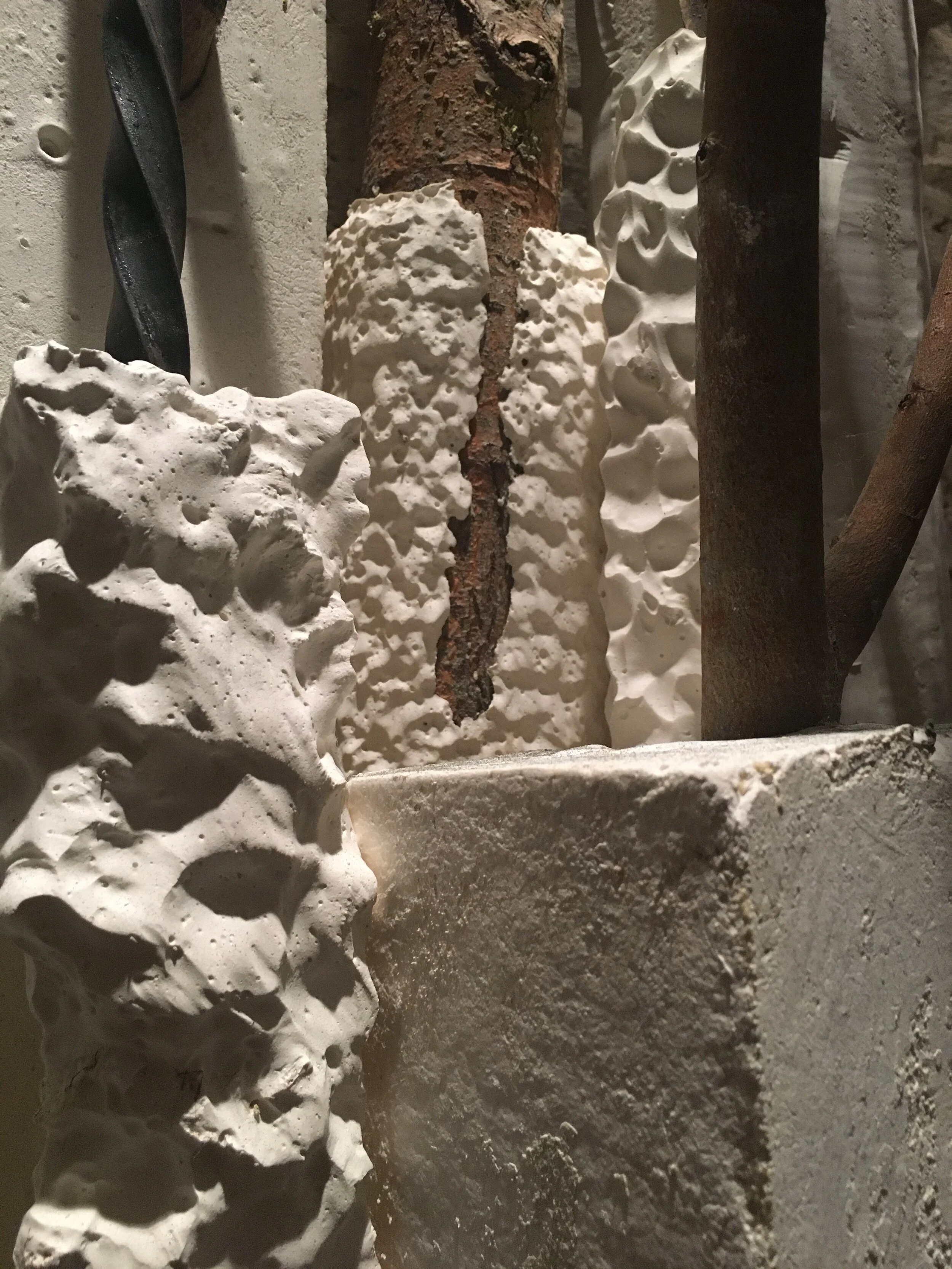
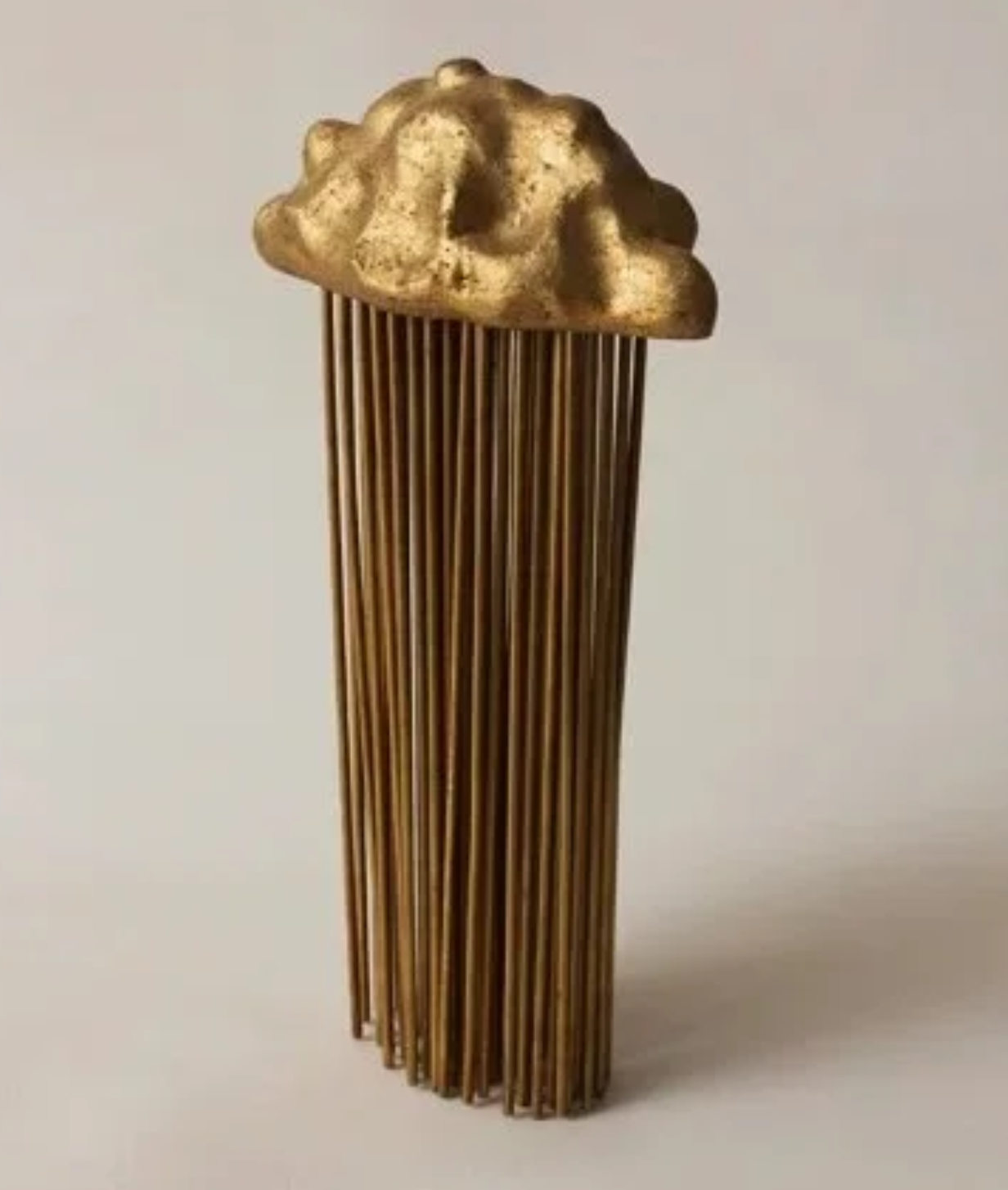
These sculptures hold time in their hands.
It brings together materials that do not age at the same rhythm: slow stone, fragile wood and matter born of the industrial instant. Within a single gesture, distant durations meet and coexist.
Each form becomes a point of condensation, a suspended moment where incompatible times find harmony. These materials, though distinct, share a far older memory: that of a world once reduced to a single gaseous mass, before separation, before form, before names.
Sculpture whispers this common origin.
It reminds us that everything we believe to be stable was once fluid, and that the timeless may be nothing more than the lingering trace of that first unity.
Different size, limestone, wood, plastic, plaster
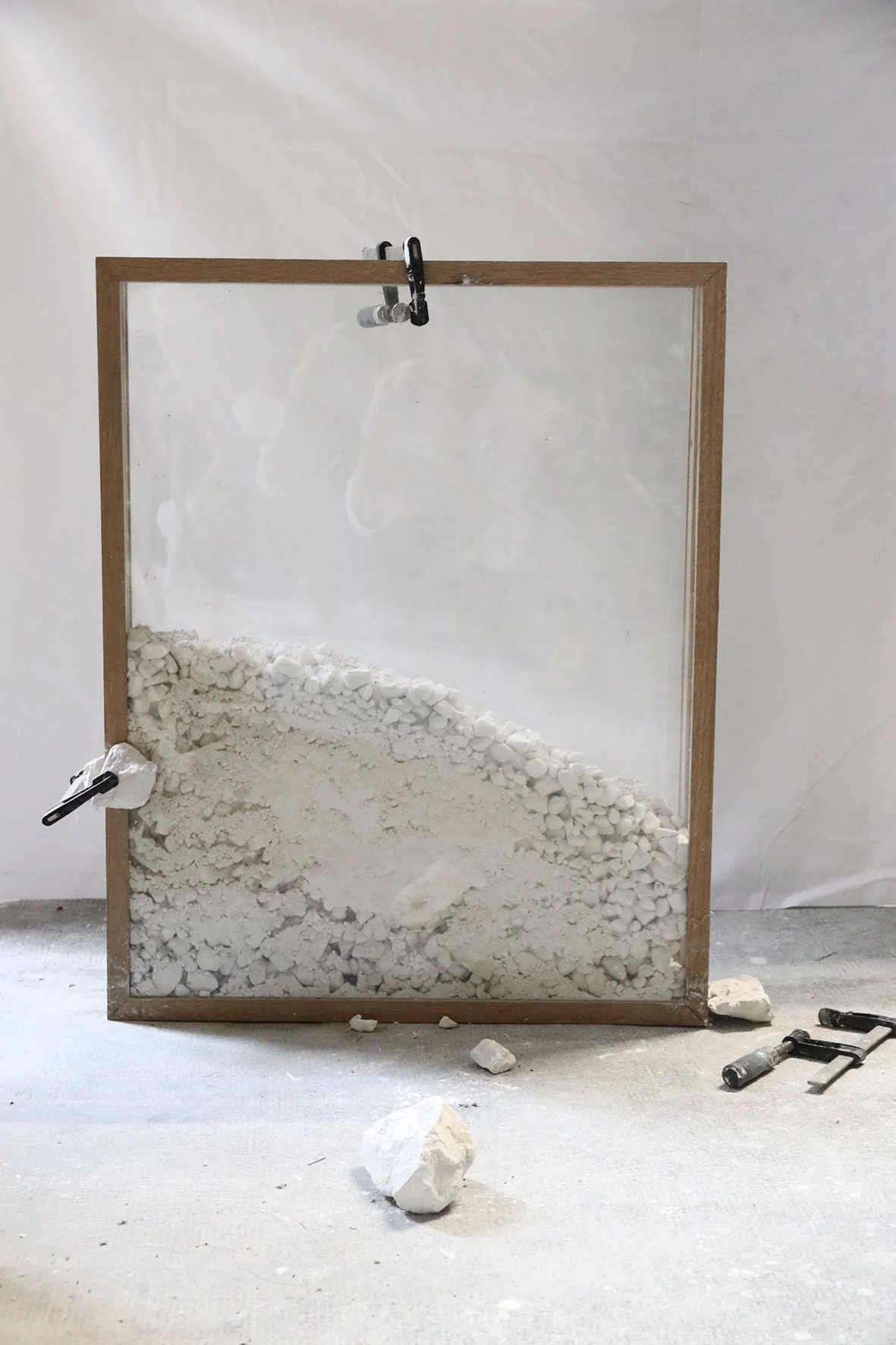
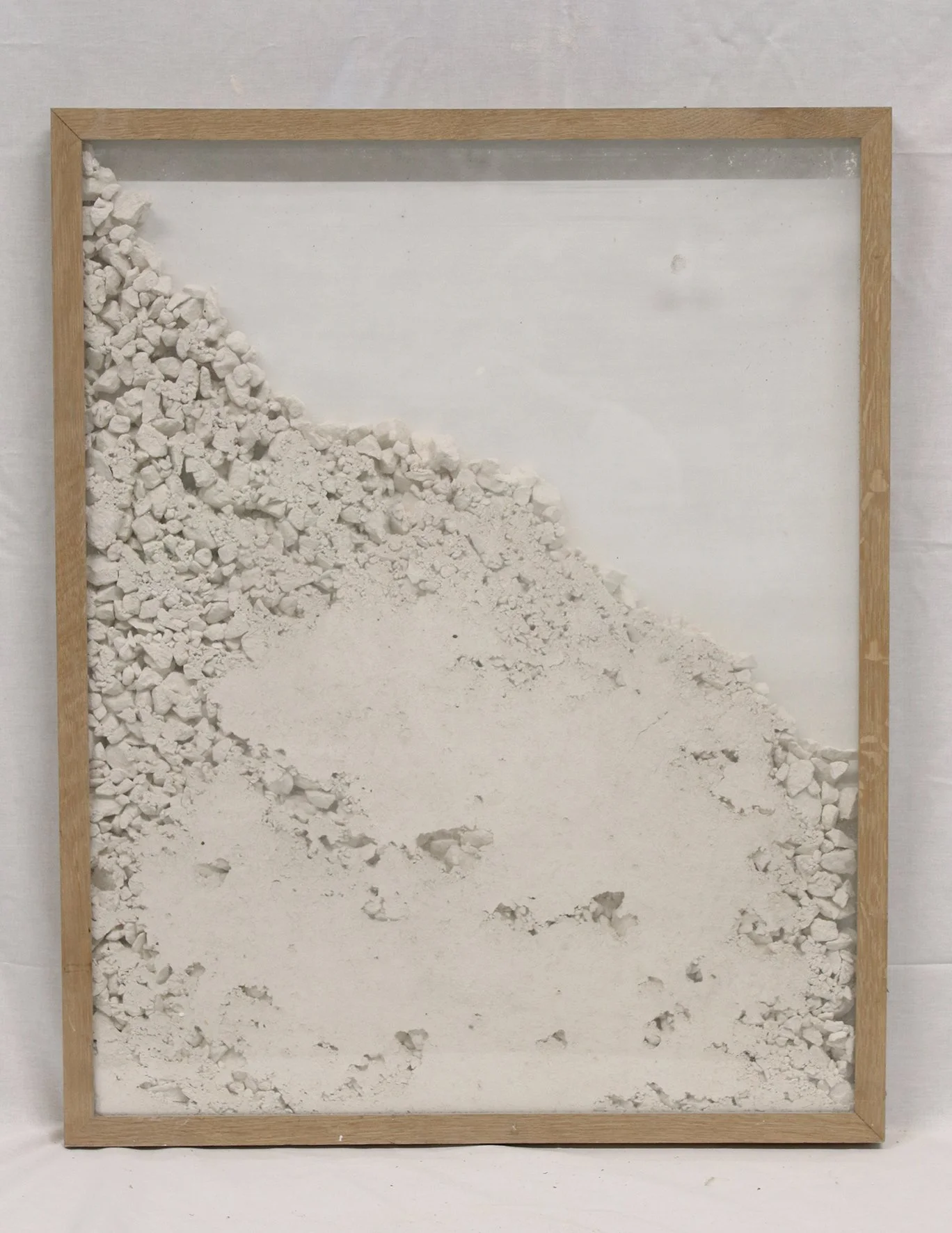
Ephemeral installation in motion, variable dimensions, modified wooden frame + clamps + limestone. 2024
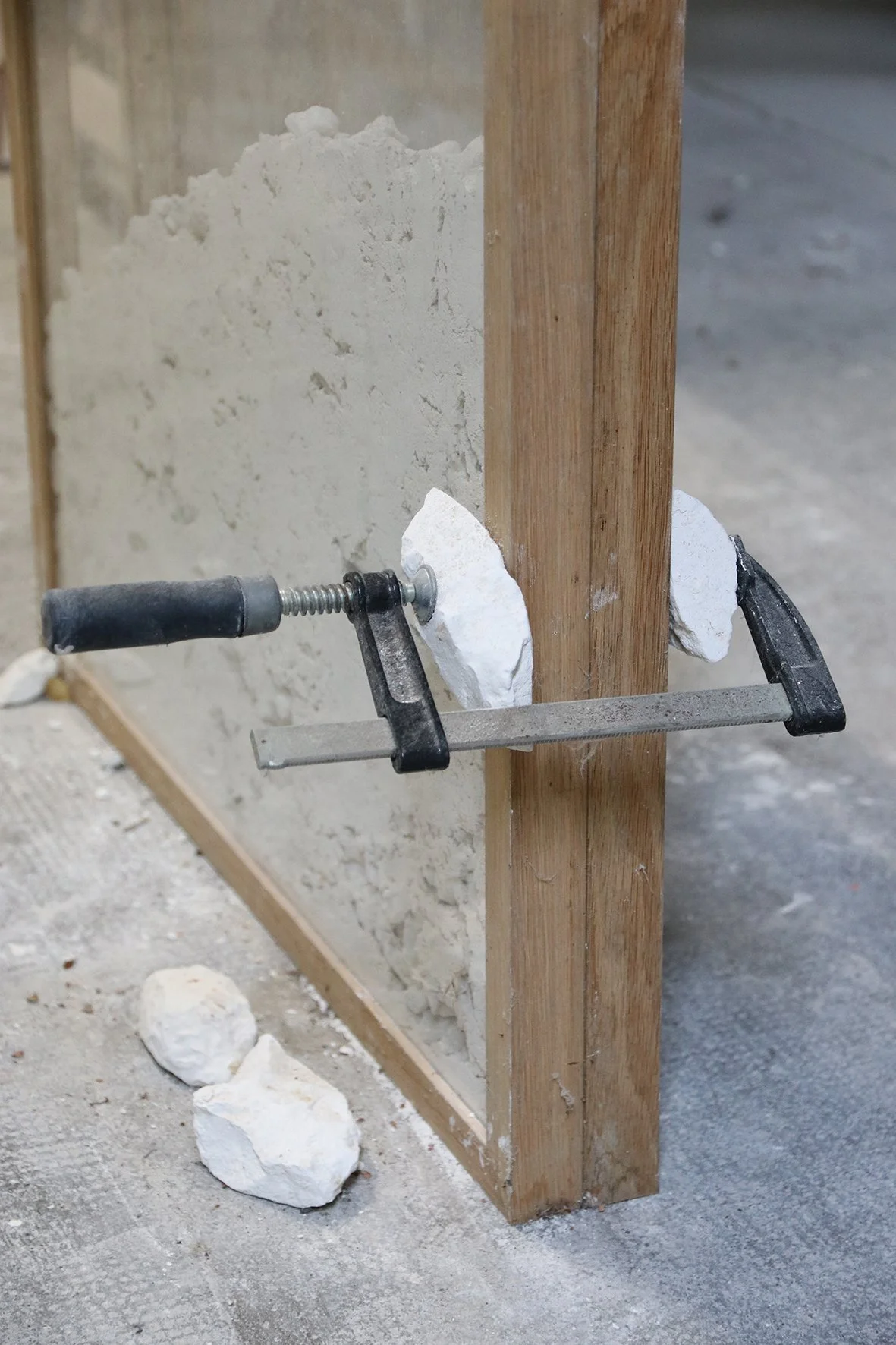
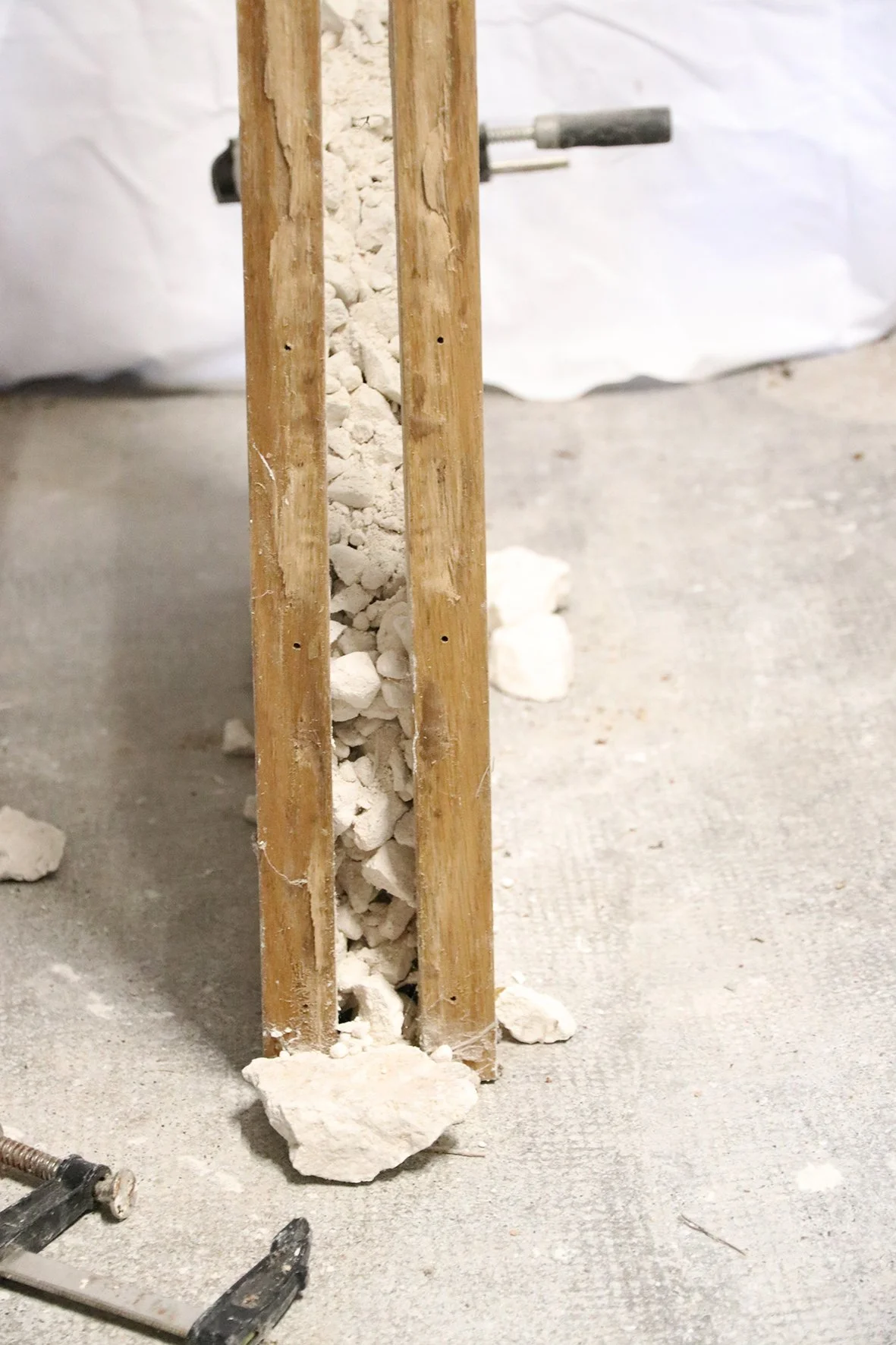
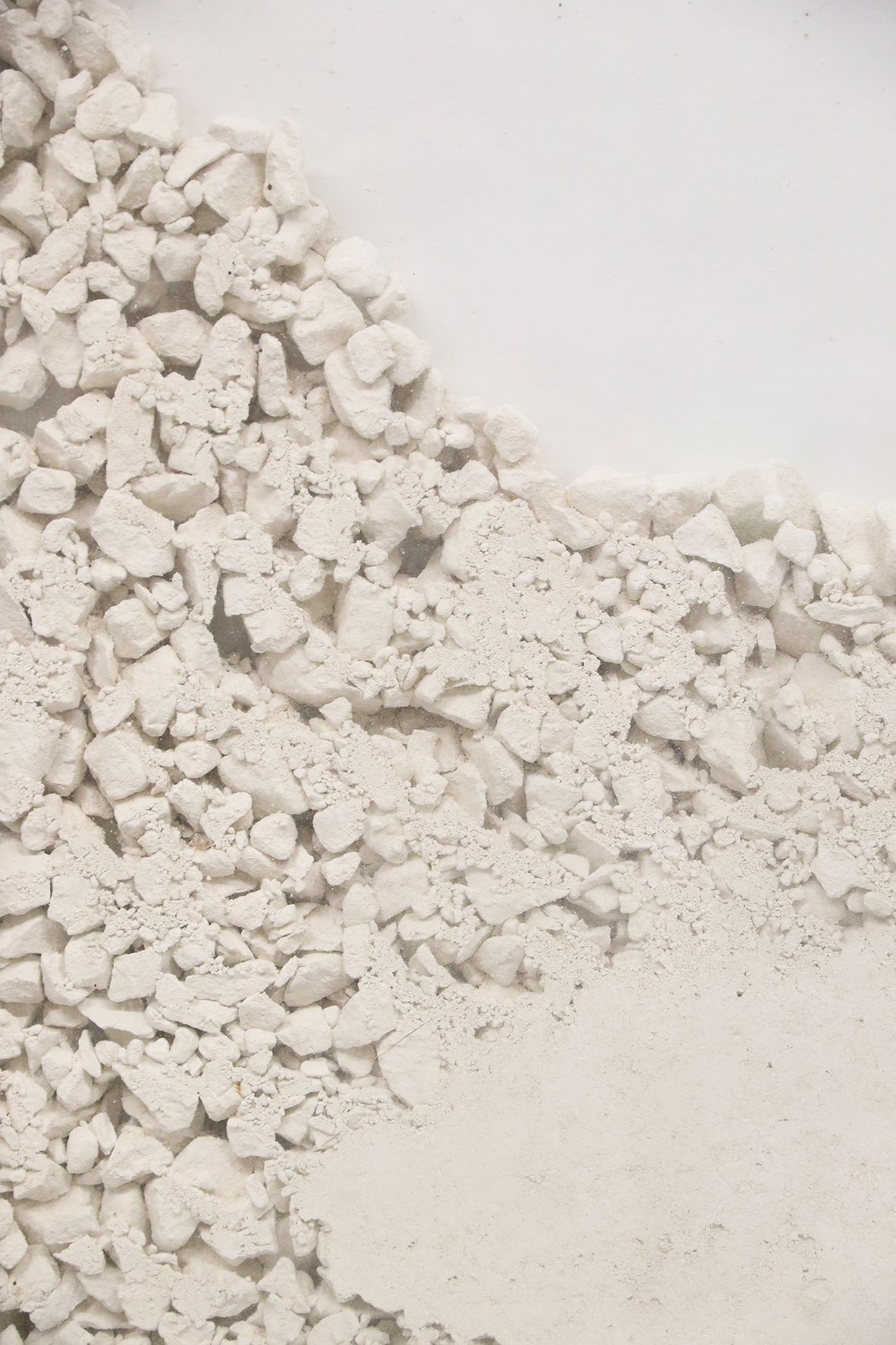
This work can be presented in several possible dimensions; one can imagine a number of frames whose action would be the same. Each glass frame contains blocks of crushed limestone of different sizes, enclosed at the core of two wooden frames of identical dimensions. Two small limestone blocks hold the frames together, while clamps keep the whole assembly in place.
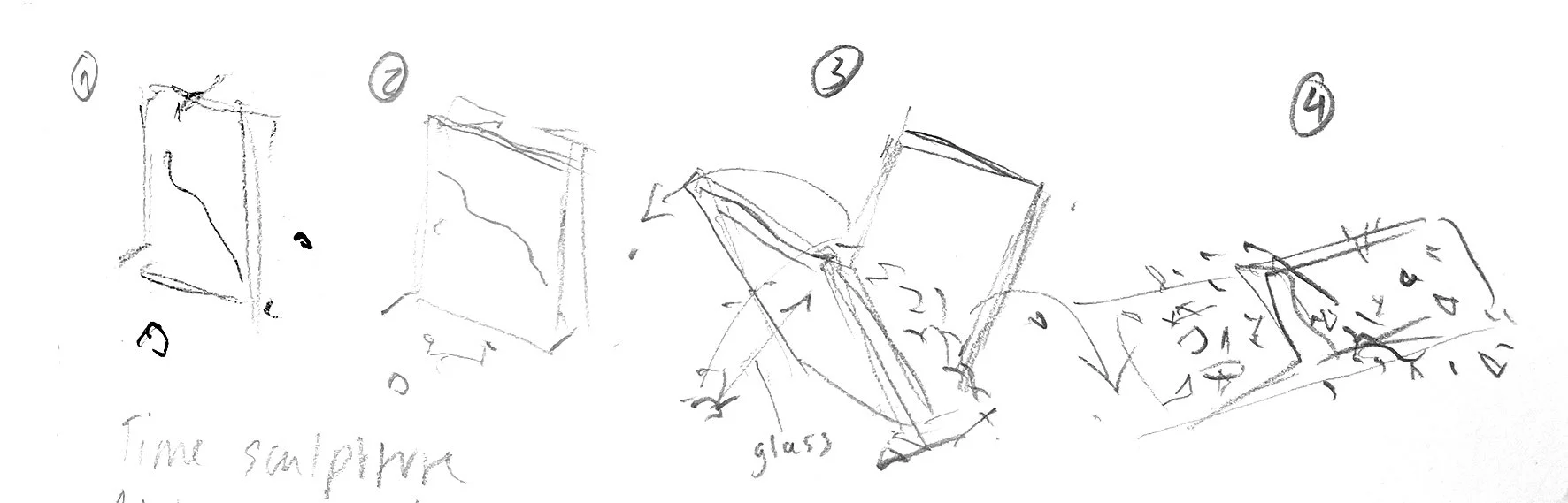
The action is as follows: limestone is a permeable material, highly influenced by its surroundings. Through their presence and breathing, exhibition visitors will gradually disintegrate the limestone that holds the frames together. The clamps will fall, the frame will open, and all the volume trapped within the frames will be released. The work is finished—for now.
In the Norman countryside, limestone is used to rebalance soils. It is this symbolic dimension that is retained for this project: the reparative artwork. It thus responds to a temporal scale different from our own—one that runs parallel to it but is completely independent. We do not know when the frame will open, nor how, nor when. In this way, we do not know when the work will be completed.
“Art is a language in itself,” suggested Gerhard Richter. In this installation, the artist and the viewer observe this unknown language, playfully engaging with it in an attempt to better grasp it.
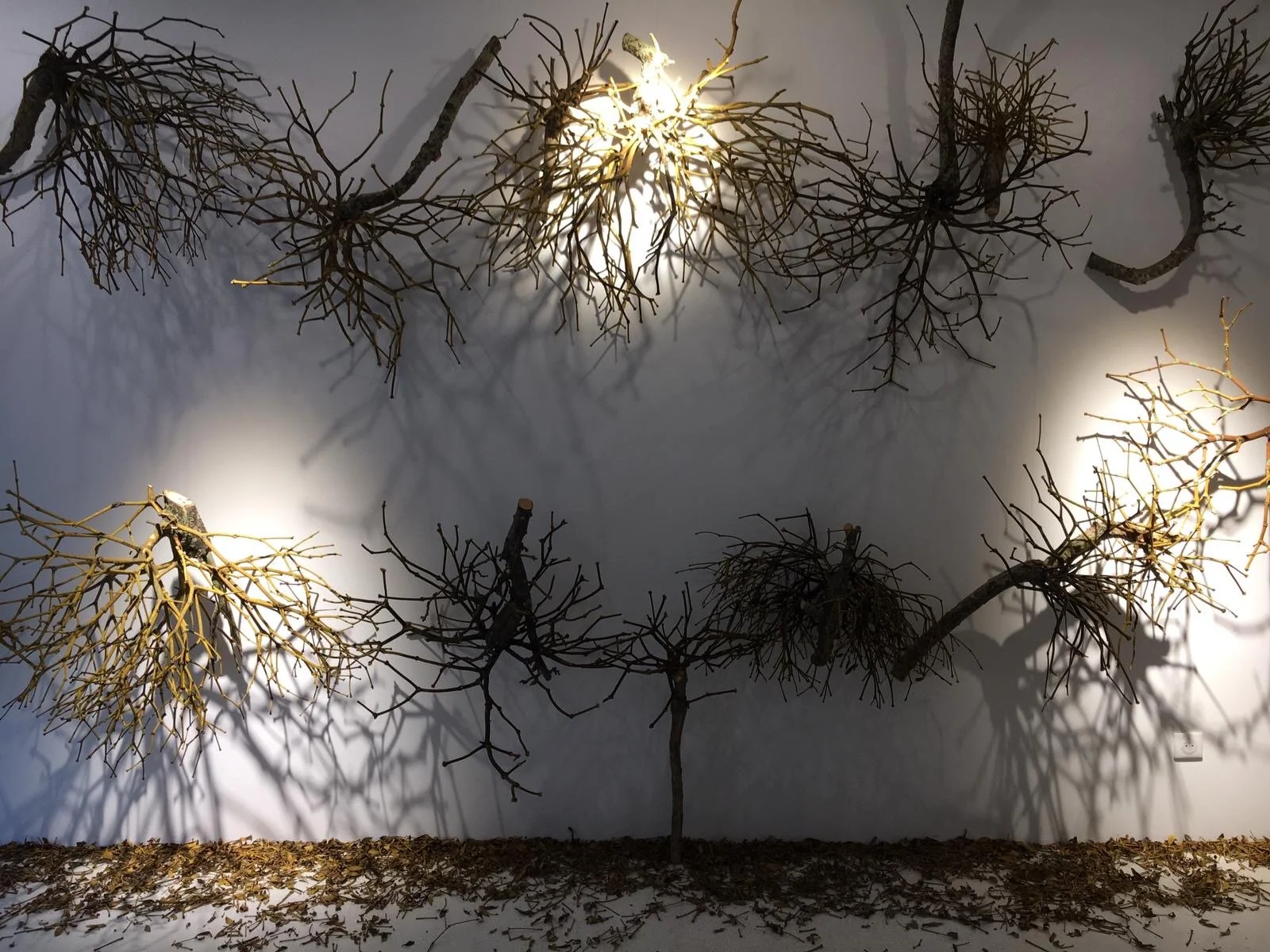
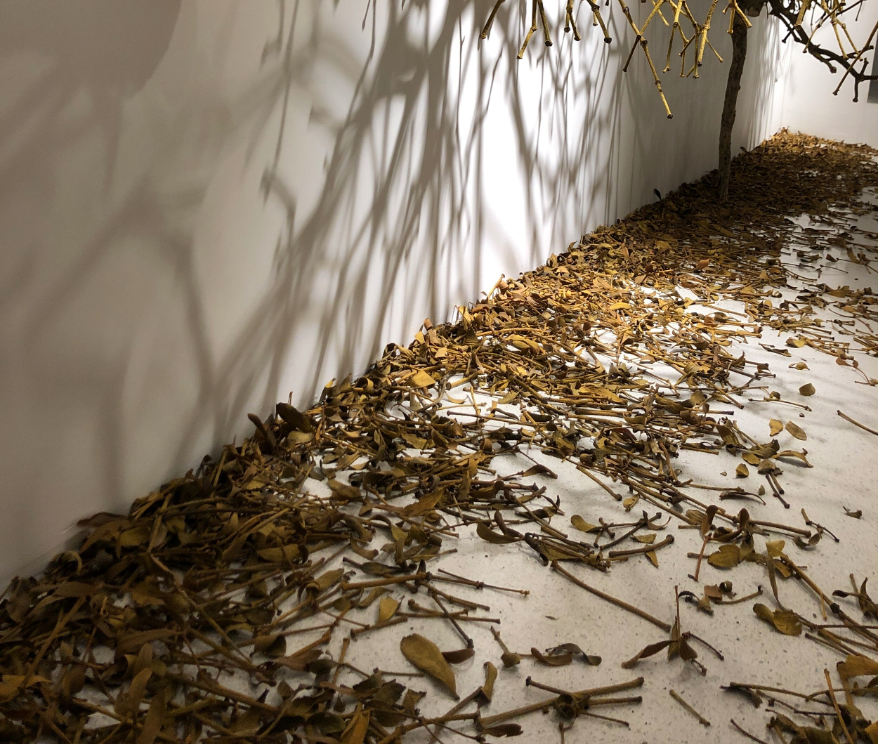
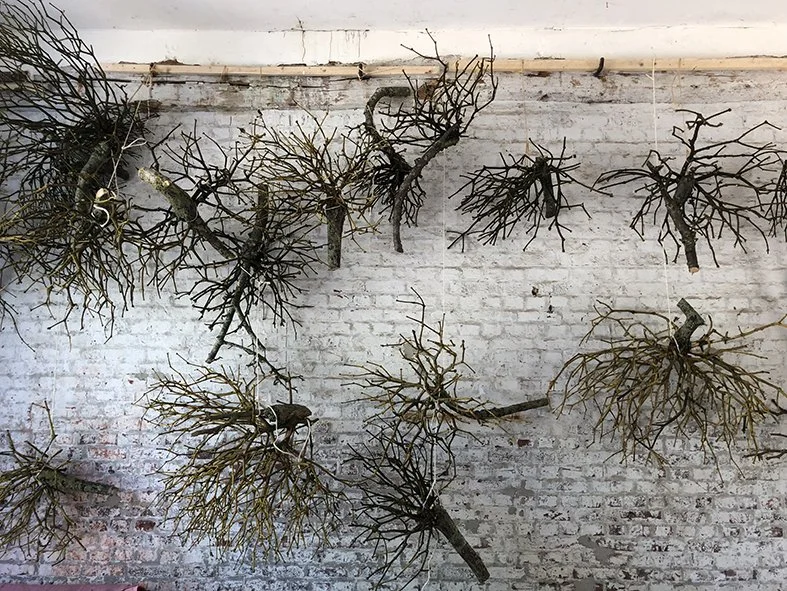
Installation on site. 600 m2 at SCHLOSS OBERDIESSBACH with ART + CHATEAU curated by Valentina Locatelli ( @art.chateau ) Mistle toe, steel sticks, sheets, desk, limestone, steel, soluble paper. BERN, Switzerland 2021.
“Shortly after settling in Normandy, Philippe Bemberg began working as a landscape gardener—a practice that led him to encounter mistletoe, “a plant unlike any other in both the botanical and cultural worlds.” Suspended between earth and sky, it defies conventional classification. Perfectly symmetrical, revered as both magical and healing since ancient Celtic times, mistletoe embodies a presence that is neither fully terrestrial nor fully celestial. The Druids—Celtic priests—once harvested it on a sacred night, placing it carefully upon a white cloth to prevent it from touching the ground, for only then could its power remain intact.
In FRACAS, his installation for Château d’Oberdiessbach, Bemberg evokes a fragment of this lost ritual, inviting visitors to awaken to the sacred rhythms of the natural world. The participation of the von Wattenwyl family in preparing the grounds and mowing the lawn according to a precise pattern, together with the work of a local arborist, reflects the artist’s commitment to weaving human presence into the landscape and celebrating local knowledge and labor.
The exhibition’s title, Chaud/Cold Sec/Wet: On Art and Latitude, gestures toward contrasts—opposing extremes of temperature and moisture—yet it also hints at the subtle space in between, the liminal zone where transformation occurs. By resurrecting this ancient ritual, Bemberg asks us to recognize that we too inhabit an in-between state: between climates, between earthly and celestial realms, and, like the mistletoe itself, suspended between the tangible and the mystical.”
VL curator
“From, to, by.”
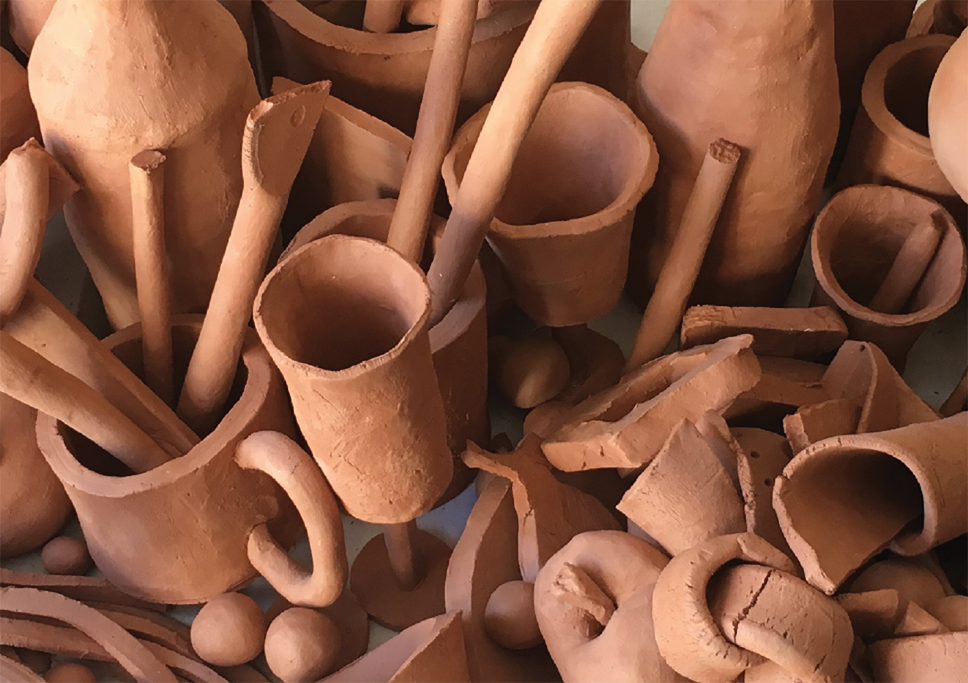
Ephemeral installation, variable dimensions, clay + water. 2019
This ephemeral work explores life and what composes it, focusing on the absolute bond that unites humans with one another and with all living beings: water. The total volume of water on Earth has remained the same since the planet’s creation, constantly changing form but never quantity. This suggests that the water that composes us existed before us and will continue after us. Everything—stone, humans, animals—is made of water, making it the silent, ubiquitous link behind all life.
“I am therefore made of water,” like the clay I sculpt, like the viewer who observes and participates. By restoring a poetic dimension to water, the work moves away from a purely mechanical understanding and invites a sensitive ecological awareness of our interconnectedness.
The installation functions as a mini-ecosystem, composed of everyday contemporary objects arranged as a still life. During the performance, water is poured over clay sculptures, slowly transforming and dissolving them. The work reveals itself as raw, dripping, organic, and alive—questioning our ideas of permanence and solidity, echoing Andy Goldsworthy’s reflections on the fluid nature of what we consider durable.
2018, water works - Philippe Bemberg
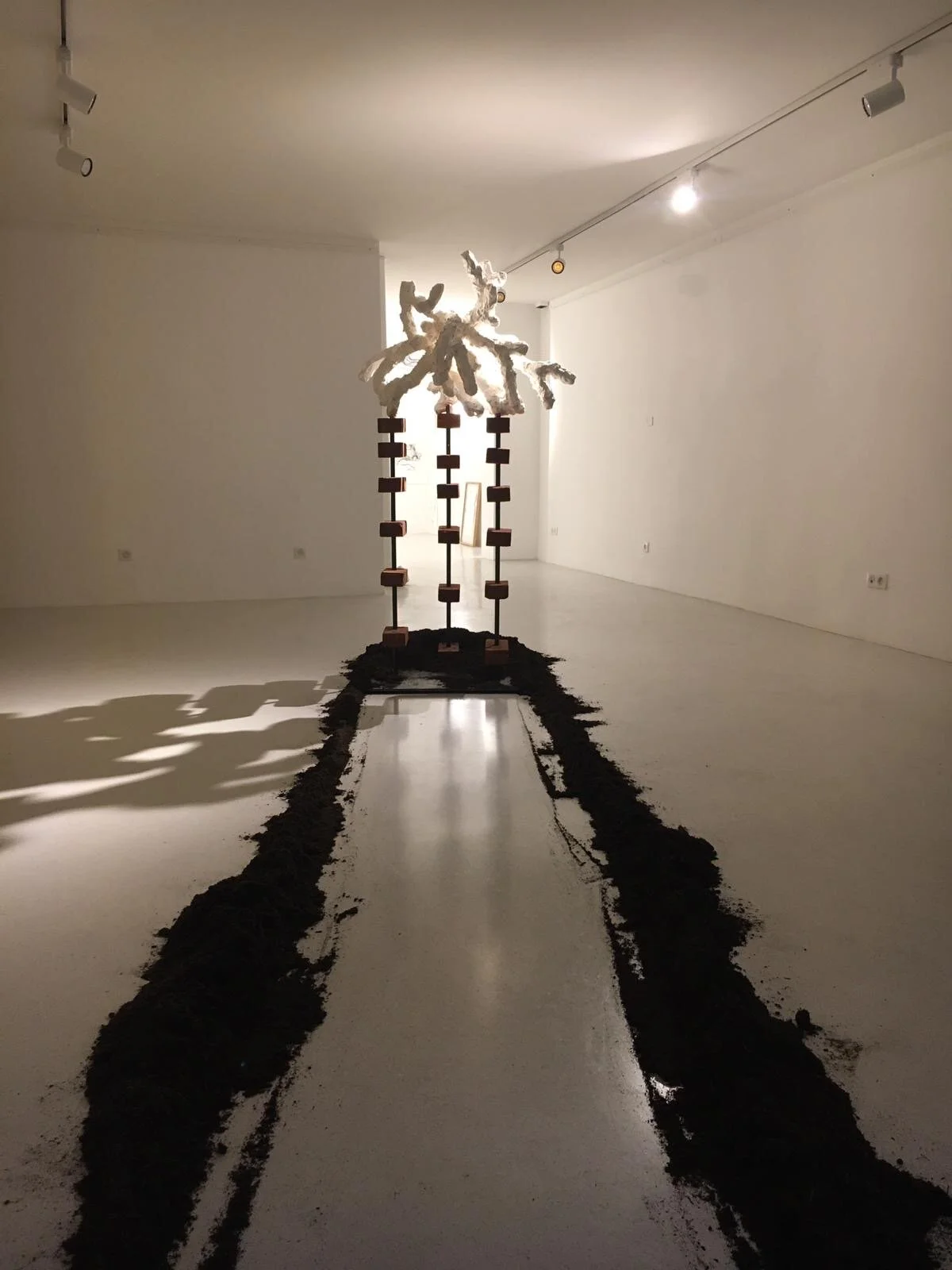
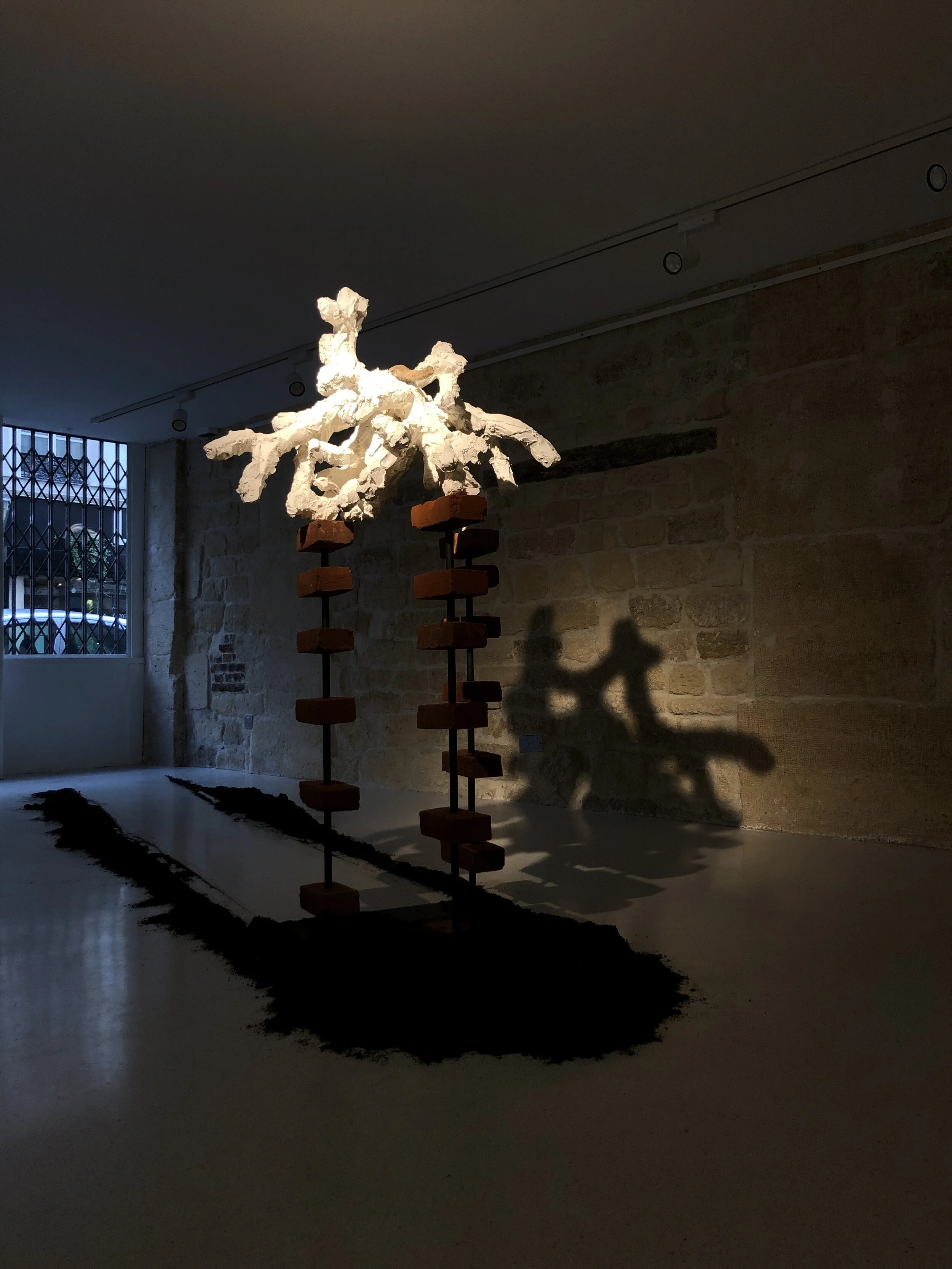
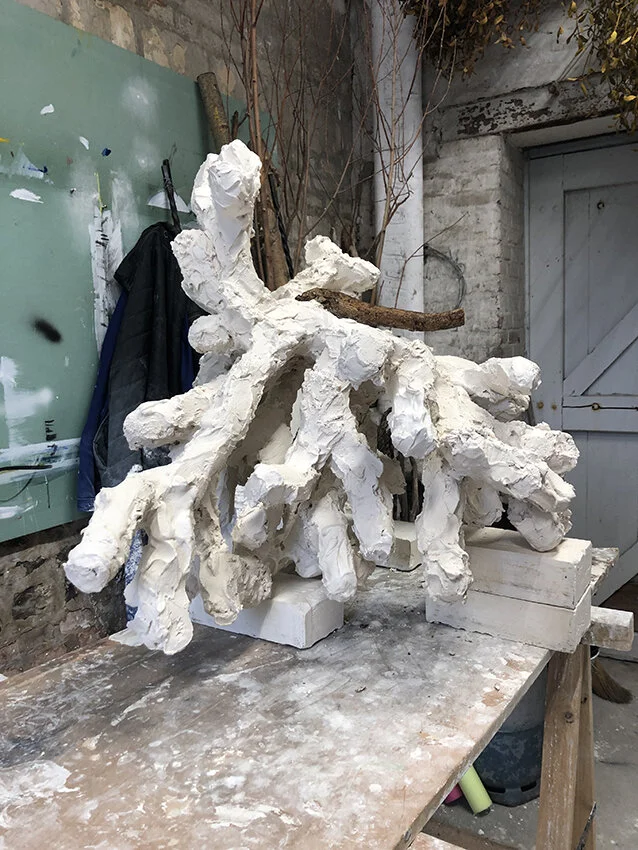
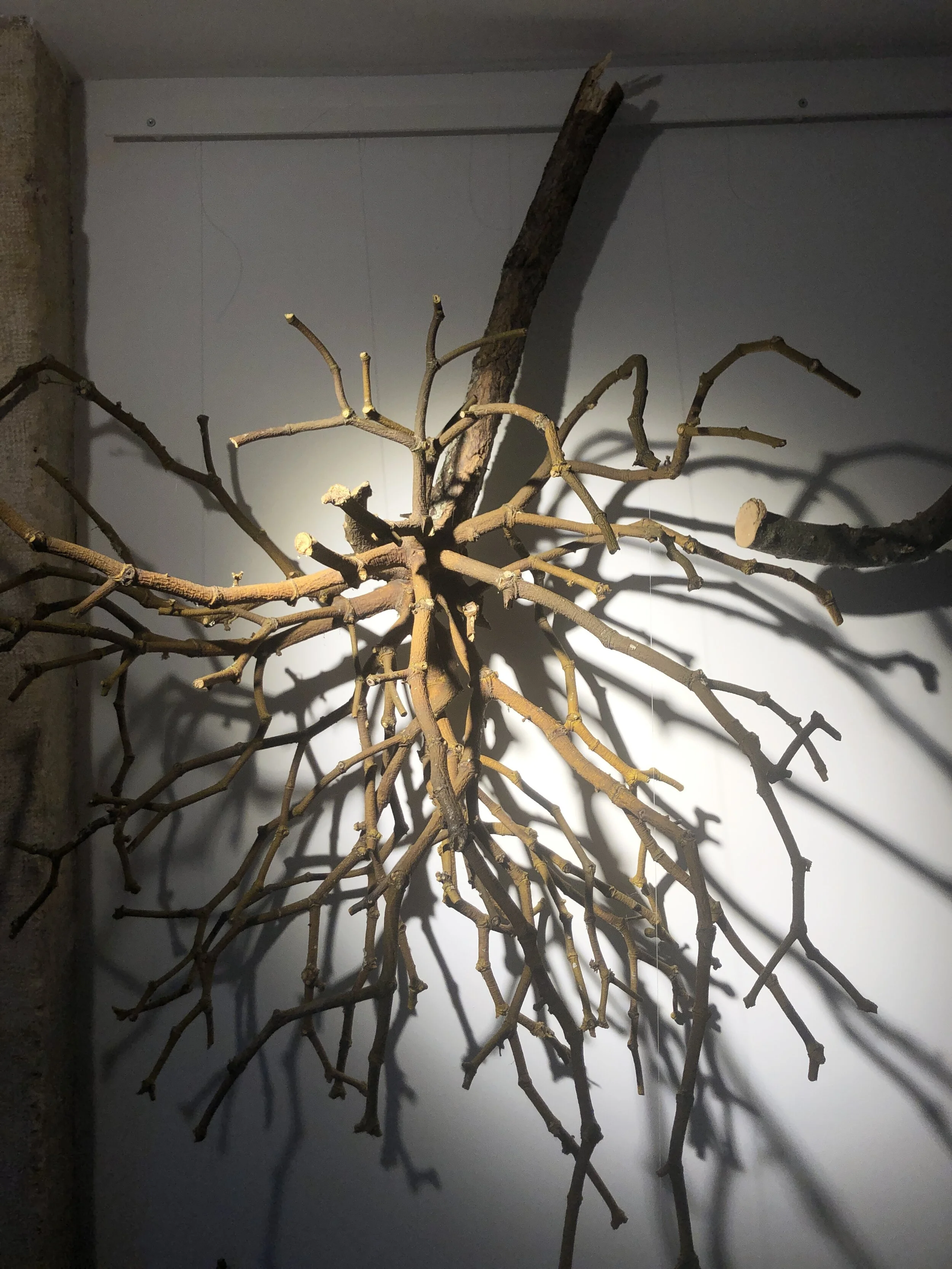
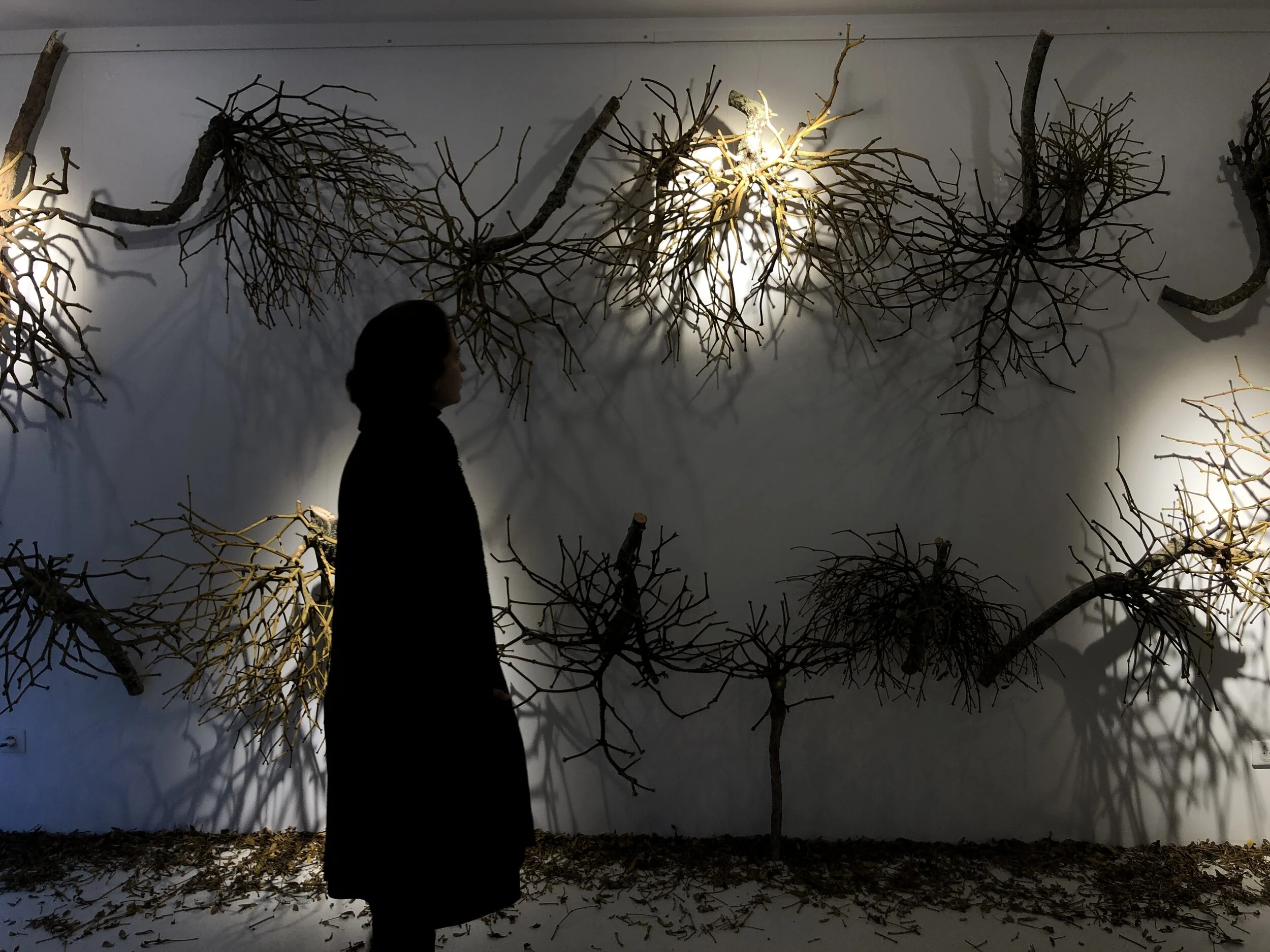
“Rhizome 76370” Installation, variable size, mistletoe, plaster, bricks, earth. View of the show in 2019. Espace DUPUIS .
These sculptures draw on Gilles Deleuze and Félix Guattari’s concept of the rhizome, a model of organization that rejects hierarchy and linear structure in favor of multiplicity and connection. Rather than forming a unified or closed system, the works unfold as open networks, with multiple points of entry and no fixed center.
Plaster, bricks, ash, and mistletoe coexist without hierarchy, combining industrial, residual, and organic materials. Their interaction emphasizes processes of construction, transformation, growth, and decay. Meaning emerges through relationships rather than representation.
In the gallery space, the sculptures function as interconnected nodes, engaging the architecture and the movement of the viewer. Like a rhizome, they resist stable form and fixed interpretation, existing instead in a continuous state of becoming.
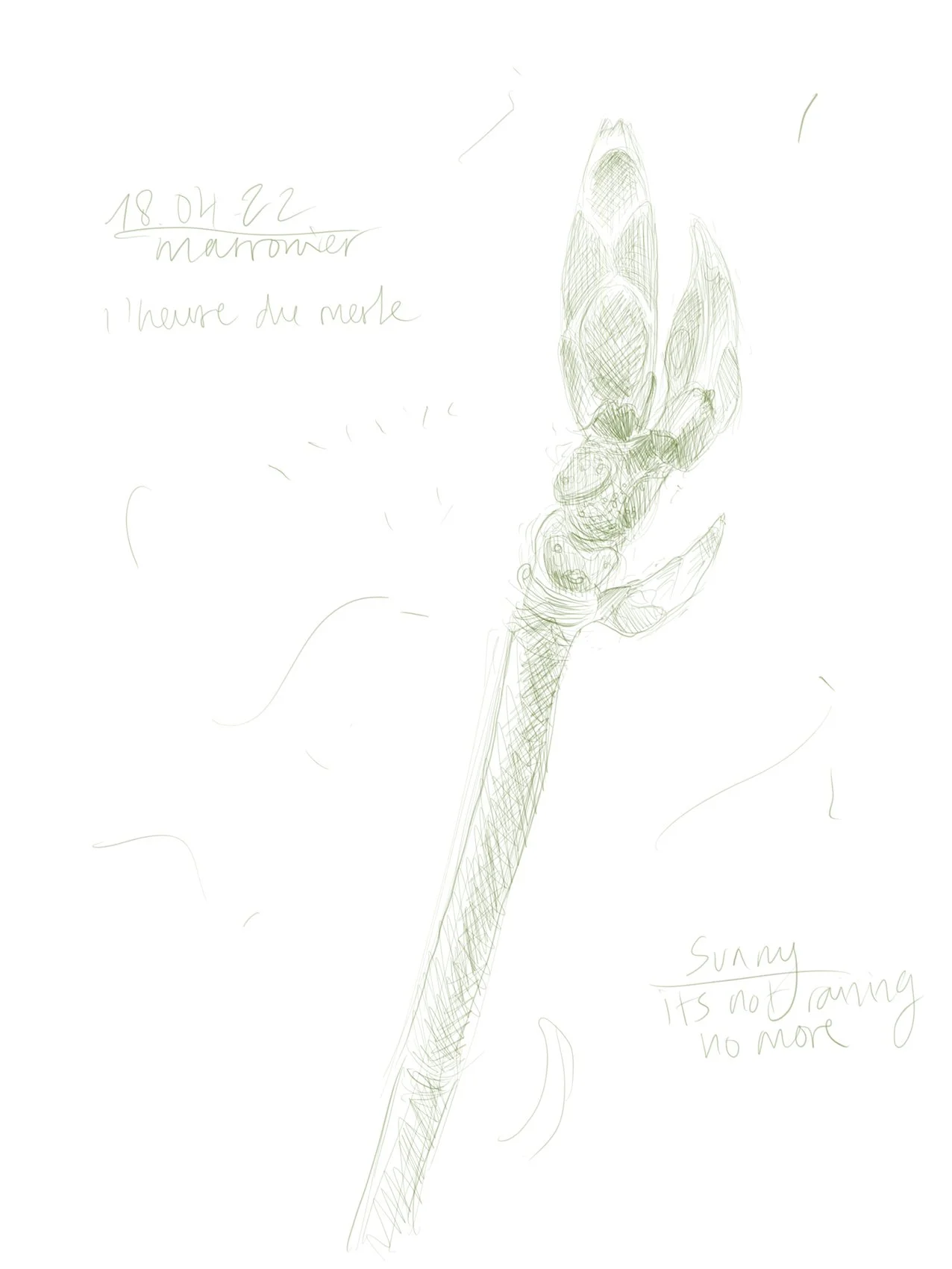
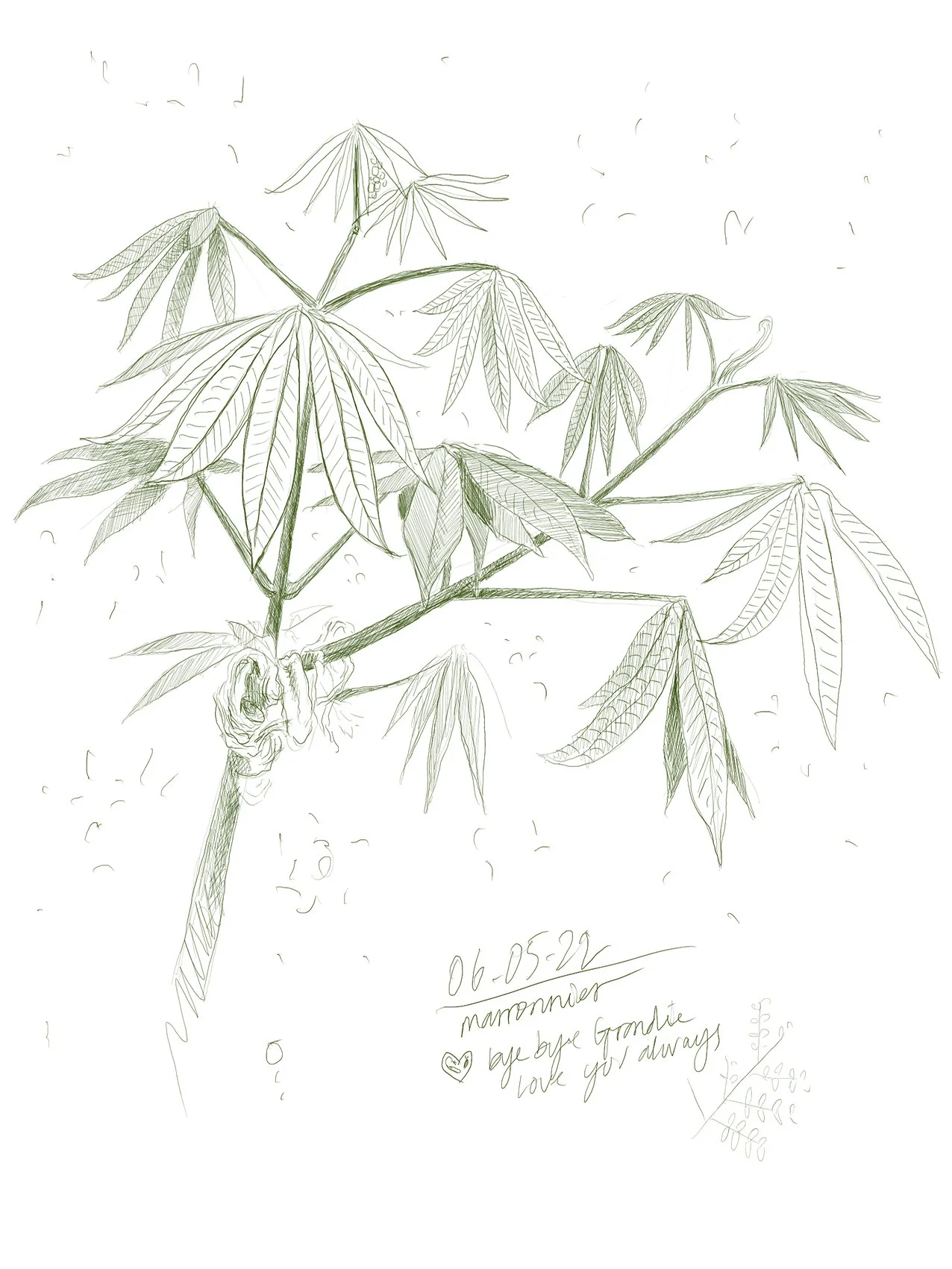
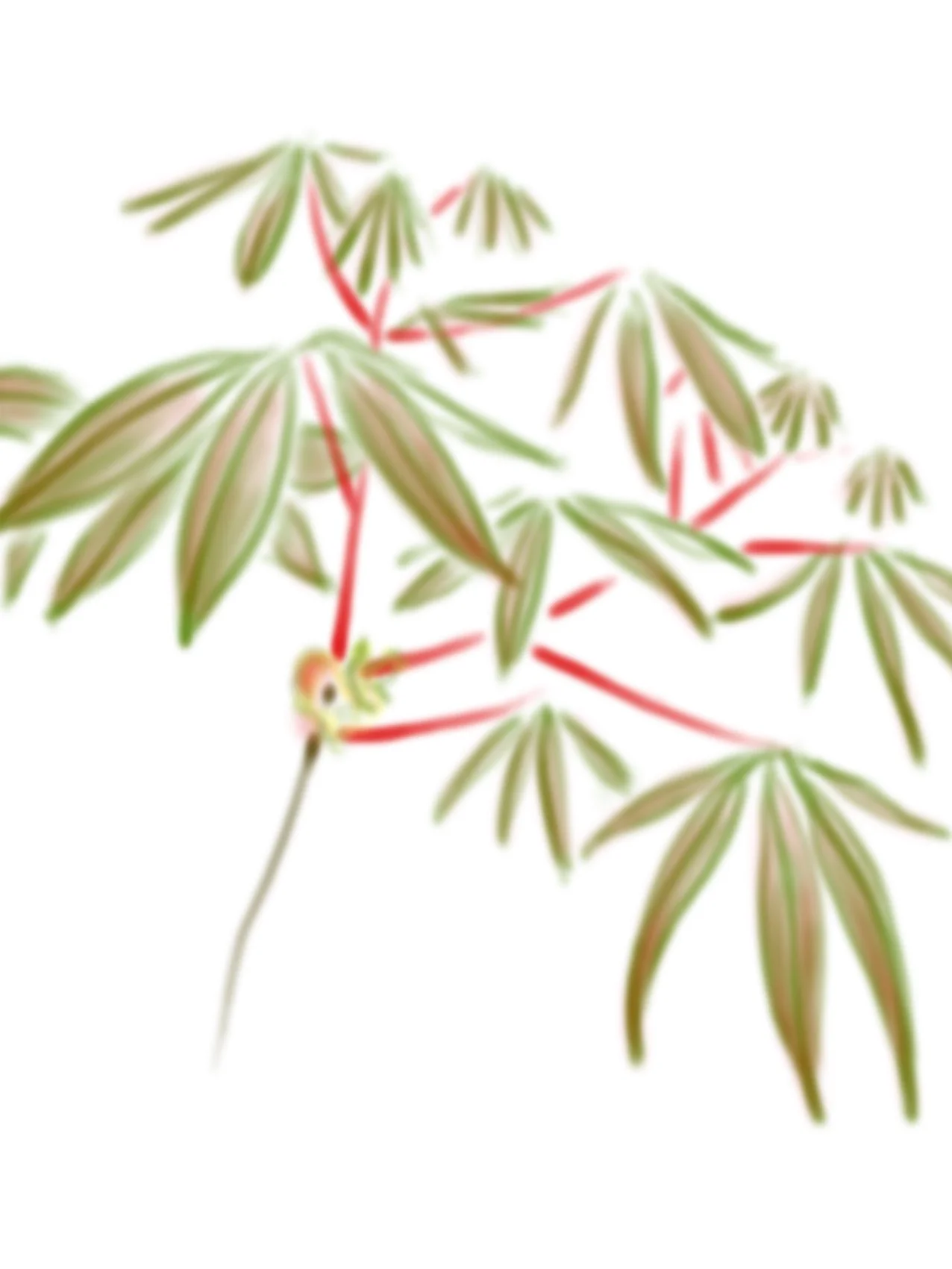
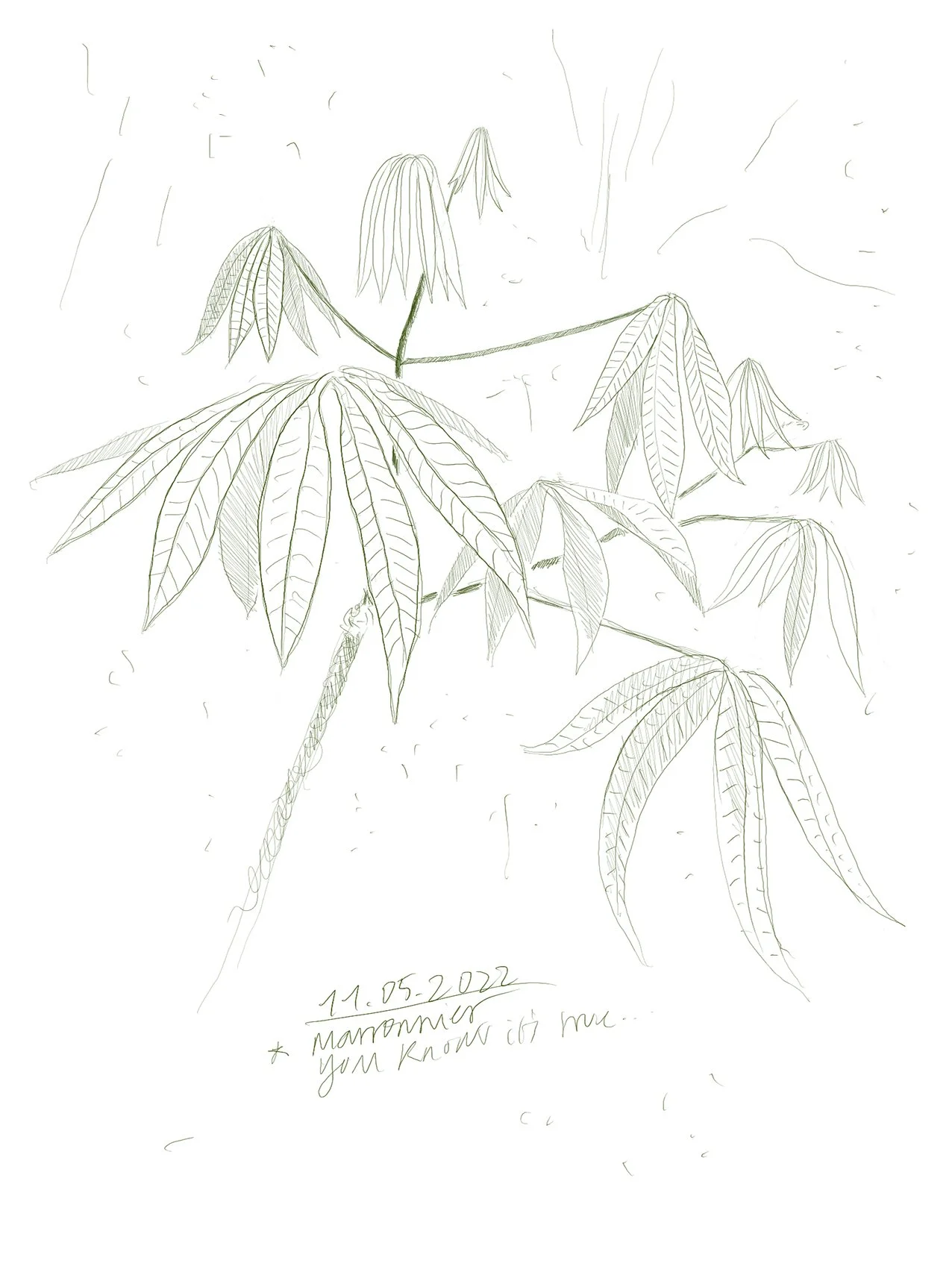
Emerging in the post-pandemic moment—when NFTs briefly redefined the conditions of artistic production and circulation—this series was conceived as an inquiry into time, growth, and digital intimacy. Commissioned by an Argentina-based company, the work consists of seventy-six daily digital drawings, each executed by hand on an iPad.
The drawings follow the springtime evolution of a horse chestnut stem, approached not as an external subject but as a shifting point of view. Growth is observed from within the plant itself, proposing a non-human temporality and a quiet displacement of authorship.
Situated between scientific observation and speculative imagination, the series resists linear narration in favor of accumulation: repetition, attention, and duration become the medium. What unfolds is less a botanical study than a meditation on emergence, care, and the translation of organic processes into digital form.
Ancourt, France
May 19, 2022
Extract from video “ELDONA” 3:44 “ April 2020.
Made during the Covid period, this video situates itself within a historical rupture in which habitual gestures, spatial norms, and social rhythms were abruptly destabilized. Framed as a performative displacement, the work traces the artist’s movement from the controlled environment of the studio into the public sphere, where the encounter with what resembles an ancestral ritual disrupts linear notions of time and progress. The persistent presence of water operates as both material and metaphor: a reminder that beneath systems of control, crisis management, and imposed stillness, there exist forces that remain indifferent to human regulation. The work resists narratives of return or resolution, insisting instead on continuous transformation—echoing the idea that we never enter the same water twice, even as we are compelled to keep crossing it.
Eldona, march 2020
water works ritual
Philippe Bemberg
“Interlude”. Music box . Ancourt 2020.
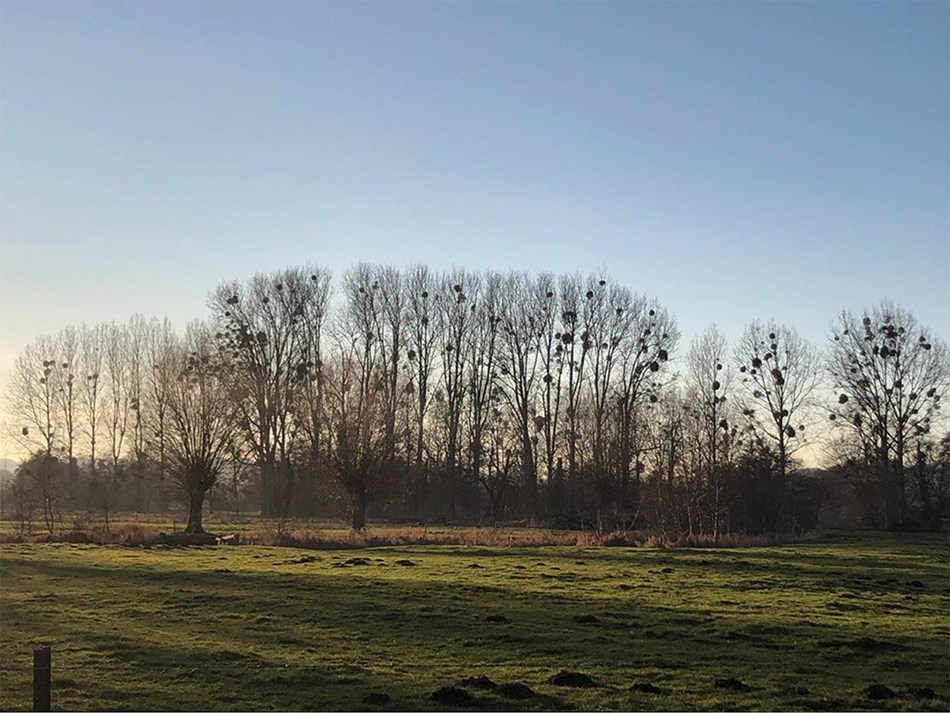
The hazardous settings of mistletoes on a poplar alley is used as a grafic prop for the elaboration of a score for a musical box.
Bronze. 26 x 16 x 8 cm. Buenos Aires 2010
Installation during the show ” Rhizome” espace DUPUIS, 2020.
These images trace the process of an installation developed for the exhibition Rhizome (2020).
The work emerges from a personal gradual shift toward the botanical world, where observation becomes a form of inquiry rather than documentation.
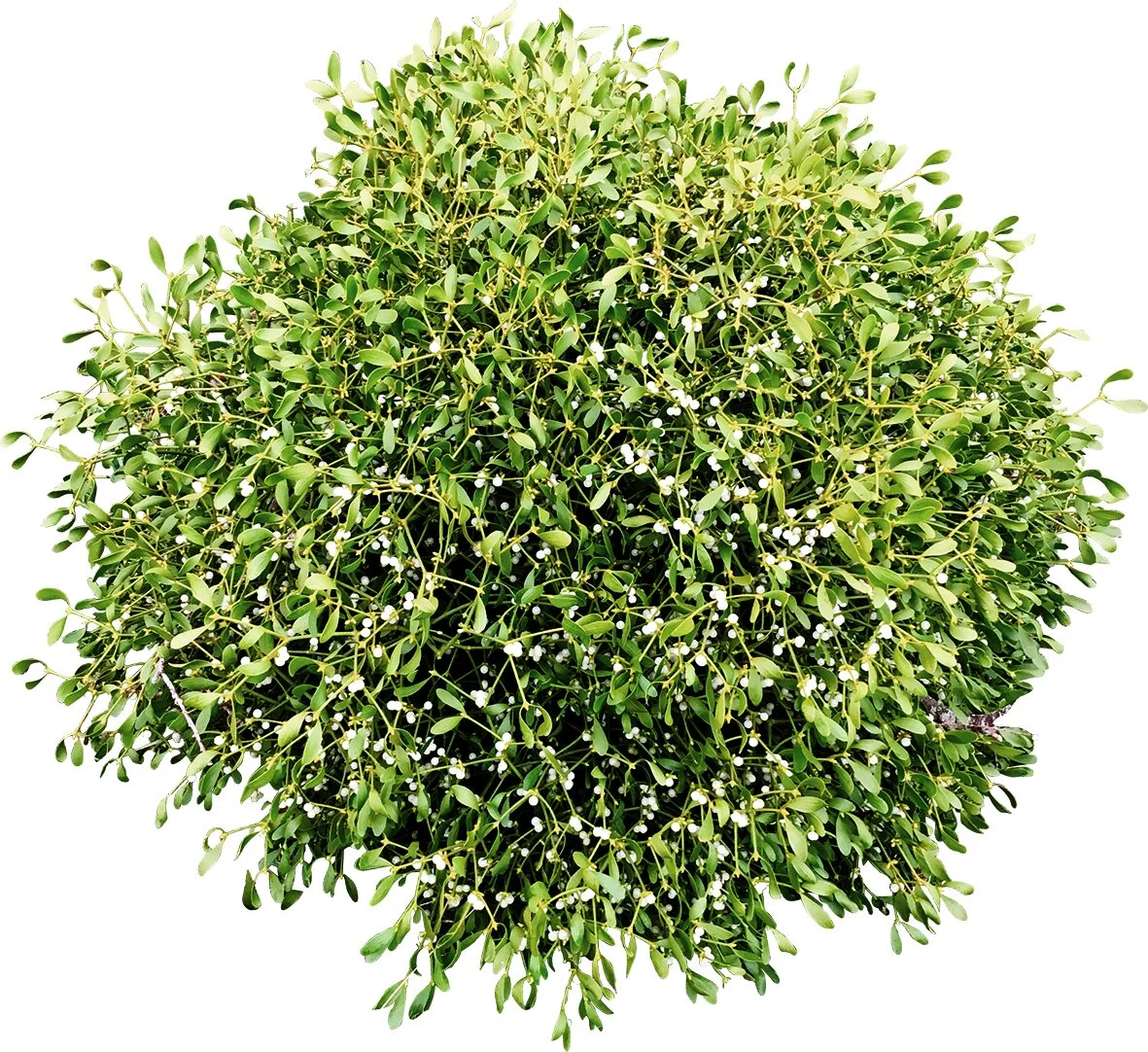
Among the first forms to assert themselves to me was the mistletoe. An anomaly within plant taxonomy, it resists the logics that govern most vegetal life. Growing without ground, it suspends itself upside down, spherical, perpetually green. It multiplies without hierarchy, replicating its own beginnings endlessly, drifting closer to the stars than to the soil. In this sense, it is a tree that refuses the earth.
The mistletoe’s apparent randomness becomes a generative structure. Its disobedience is not chaos, but an alternative order—one that unsettles ideas of origin, gravity, and growth. By translating this logic into the installation, the work proposes a pattern that is unstable, proliferating, and unresolved.
What is presented is not a model of nature, but a question posed to it:
How fixed are the laws we assign to natural forms?
And where does pattern end, and belief begin?
Installation, variable size ,wood, plaster, steel. 2019
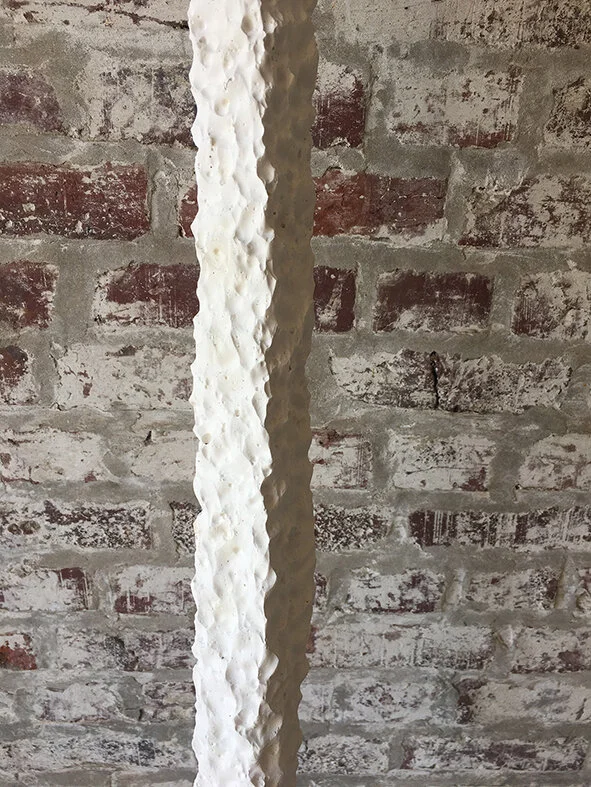
Each rod—metal, wood, or a quiet fusion of the two—is sealed in plaster and placed in the river, where it drifts for a day. The current, restless and insistent, writes upon it: lines, swirls, traces that exist only for that instant, shaped by the hour, the weather, the pulse of the water. No mark is repeated; no form will ever return.
Water, in its impermanence, is infinite. Each droplet, as some have observed, holds a singularity impossible to replicate. Here, that singularity is caught in plaster, a fragile echo of a fleeting moment, born of a force larger than the hand that placed it.
In the river, my gesture dissolves. The work emerges through immersion, through erosion, through a dialogue with the current itself—ephemeral, eternal.
The figures that arise are totemic, lunar, archaic: as if they carry memory older than ourselves, whispers of time flowing through matter. Alongside rods untouched by water, they reveal the river’s transformative power. Their surfaces—worn, delicate, monumental—remind us of our own impermanence, and of the quiet humility demanded by the eternal movement of water.
Within the installation, I chose to juxtapose rods transformed by water with raw, untouched rods in order to emphasize the river’s power over matter. Their eroded surfaces—both fragile and monumental—draw us back to our own vulnerability, inviting a sense of humility in the face of the enduring force and vast temporality of water.
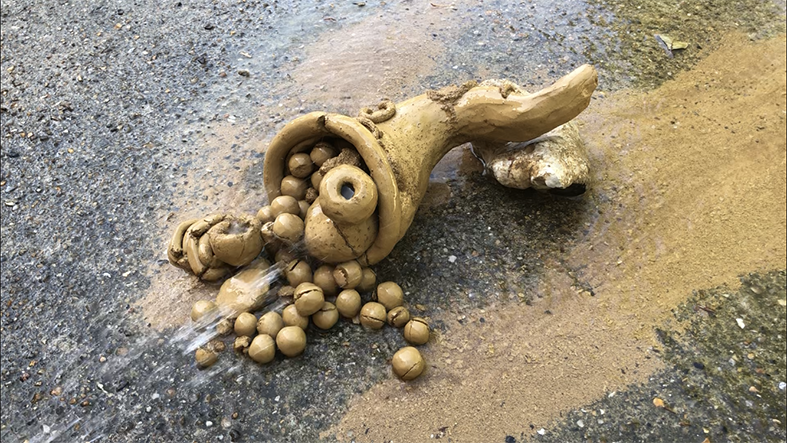
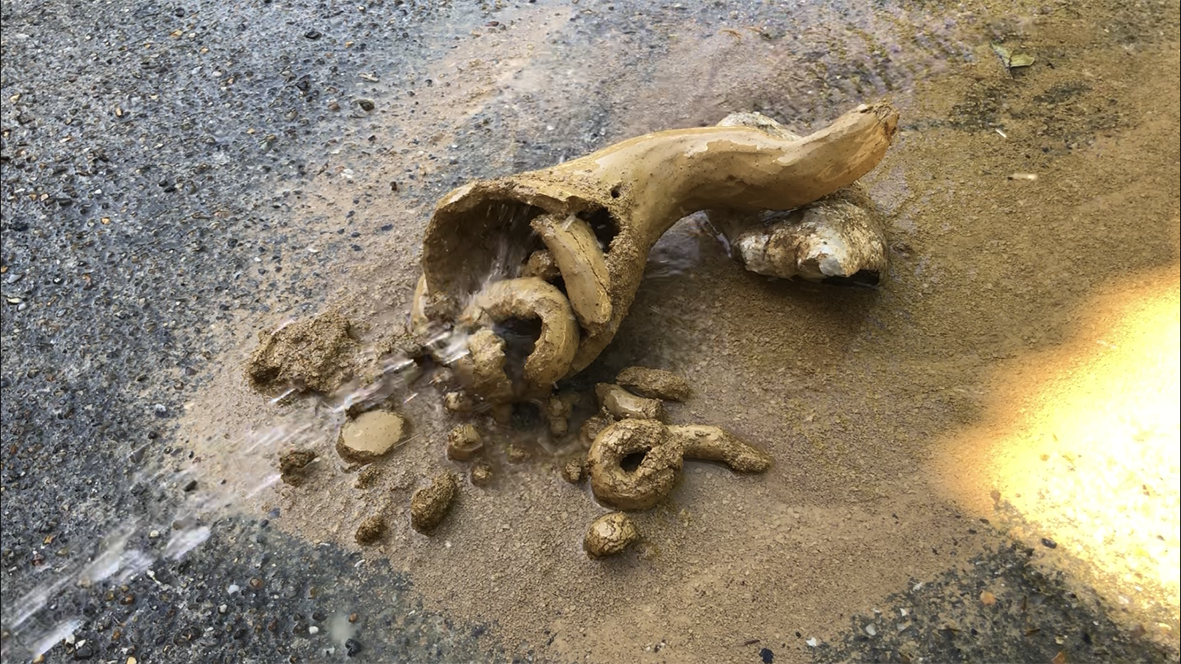
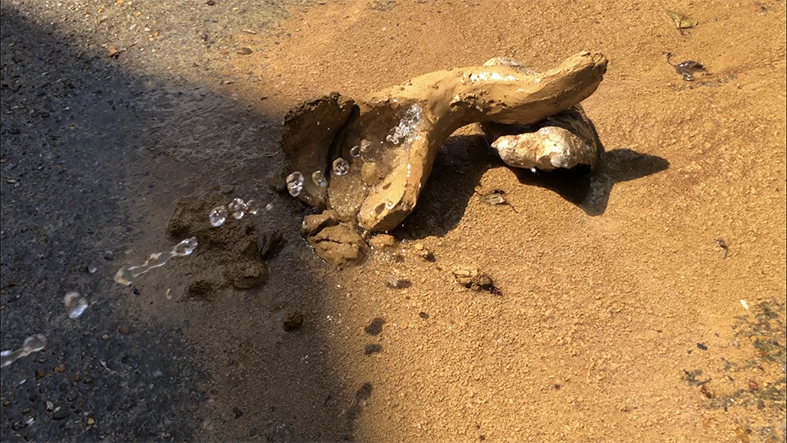
Extract from video. 2019
The video confronts us with the live dissolution of a clay cornucopia, a symbol of abundance, as it slowly disintegrates into nothing. What is this spectacle of disappearance if not a meditation on the futility of accumulation? Here, the artist’s hand becomes almost irrelevant—the gesture does not belong to them; creation is already ancient, preexisting, and inevitable. The work stages the collapse of form into its elemental origin, a return to mineral silence. In watching, we are complicit in witnessing abundance unmade, confronting the tension between the desire to possess and the inevitability of loss. The piece destabilizes notions of authorship, permanence, and value, suggesting that all art—and all meaning—is transient, destined to dissolve back into the unremarkable matter from which it sprang. It is at once elegy, critique, and provocation: a radical insistence that creation and decay are inseparable, that to hold is always to lose.
Blunt object/ Pear 12 x 6 x 6 cm 2010 Buenos aires,
Asthma, 15 x 10 x 7 cm, Clay & copper, 2016 Paris
Magritte, 14 x 14 x 14 cm, Clay, 2016 Paris
Eccentric pieces of furniture based on marqueterie made with designer R. Bovy, from 2015 to 2018. Different size, different textures.
These pieces of furniture draw their essence from the legacy of ancient craftsmen, bridging the methods of the past with the technologies of the present. They honor the tools once at hand while embracing contemporary instruments—like laser cutting—as a means to render forms with precise, almost graphic clarity. Each piece exists to transcend time, inviting the viewer into a space of boundless imagination and creative freedom.